English
 Español
 Русский
 لالعربية

Mezclador de Hojas Sigma de Doble Eje: Manejo Eficiente de Materiales Altamente Viscosos
Fecha de publicación:
2026-07-13
Optimice la producción de masilla y adhesivos con una mezcladora de doble eje y hojas sigma. Conozca las especificaciones técnicas, las ventajas del par motor y los aumentos de eficiencia.
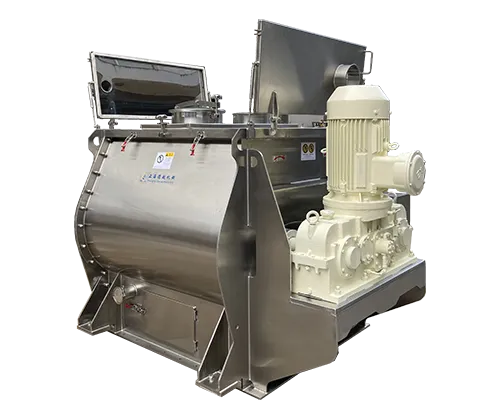
Mezcladora de hoja sigma de doble eje: Manejo eficiente de materiales altamente viscosos
En una planta de fabricación de sellantes a gran escala en Guangdong, un lote rutinario de adhesivo de silicona de alta viscosidad se detuvo. La mezcladora estándar de eje único, que operaba a 15 rpm, no logró generar suficiente esfuerzo cortante para descomponer los aglomerados en el lote de 500 kg $4,500 . La consistencia desigual resultante requirió un ciclo completo de reprocesamiento, lo que le costó a la instalación aproximadamente en materias primas desperdiciadas y 8 horas
de tiempo de inactividad. Este escenario no es único; es el desafío definitorio para los productores que manejan pastas espesas, masillas y masillas selladoras. Cuando la viscosidad del material supera100,000 cP
, las tecnologías de mezclado convencionales a menudo se quedan cortas. Dependen de la agitación superficial en lugar de la penetración profunda, lo que conduce a zonas muertas y calidad inconsistente del producto. La solución radica en el diseño mecánico especializado. La mezcladora de hoja sigma de doble eje se ha convertido en el estándar de la industria para estas aplicaciones exigentes, ofreciendo una distribución superior del par motor y una acción de entrelazado que asegura la homogeneidad incluso en los compuestos más resistentes.
La mecánica del mezclado de alta viscosidad
A diferencia de las mezcladoras de paletas que simplemente agitan las capas superficiales, una mezcladora de hoja sigma utiliza dos ejes no paralelos que giran a diferentes velocidades. Esta velocidad diferencial crea un patrón de flujo complejo esencial para descomponer materiales altamente viscosos. Las hojas, con forma de la letra griega Sigma ($\Sigma$), están diseñadas para raspar las paredes del recipiente mientras empujan simultáneamente el material hacia el centro. La clave de su eficiencia es el concepto de "entrelazado". A medida que los dos ejes giran, las hojas sigma pasan cerca unas de otras sin tocarse. Esta estrecha brecha genera fuerzas de cizallamiento intensas, amasando y plegando efectivamente el material. Para aplicaciones como mezclado de masillas o requisitos de equipos de mezclado de adhesivos
, esta acción previene la formación de bolsas de aire y asegura que los cargadores pesados, como el carbonato de calcio o la talco, se dispersen uniformemente en todo el aglutinante.
Par motor y densidad de potencia Manejar materiales con una densidad de 2.5 g/cm³ requiere una potencia significativa. Una típica mezcladora de hoja sigma de doble eje está diseñada con una caja de engranajes de alto par capaz de entregar hasta 200 kW
de potencia. Esta alta densidad de potencia permite que la mezcladora mantenga la velocidad rotacional incluso cuando la viscosidad aumenta durante las etapas iniciales del mezclado. En contraste, los sistemas de menor par pueden detenerse o sobrecalentarse, lo que lleva a un fallo prematuro del motor y una calidad inconsistente del lote.
Mezcladoras sigma de doble eje frente a eje único
| Seleccionar entre configuraciones de eje único o doble depende en gran medida de las propiedades reológicas de su producto. Mientras que las mezcladoras de eje único son rentables para pastas de viscosidad baja a media, luchan con la alta resistencia encontrada en masillas gruesas. La siguiente tabla describe las diferencias críticas: | Característica | Mezcladora Sigma de Eje Único |
|---|---|---|
| Mezcladora Sigma de Doble Eje | Rango de Viscosidad Óptimo | 1,000 - 50,000 cP |
| 50,000 - 500,000+ cP | Acción de Mezclado | Plegado superficial, cizallamiento limitado |
| Amasado profundo, alto cizallamiento por entrelazado | Tiempo de Homogeneidad | 10 - 20 minutes |
| Heat Generation | Lower, but less efficient | Controlled via jacketed vessel |
| Ideal Application | Cosmetics, light adhesives | Construction putties, mastics, silicones |
For highly viscous mixing tasks, the dual shaft configuration reduces processing time by up to 50% compared to single shaft alternatives. This reduction in cycle time translates directly to higher throughput and lower energy costs per kilogram of finished product.
Key Technical Advantages for Industrial Applications
Engineers and plant managers prioritize reliability and ease of maintenance when specifying equipment. The modern twin shaft mixer addresses these concerns through several design innovations:
- Jacketed Vessel Design: Most industrial mixers feature a double-walled jacket allowing for circulating hot or cold water. This is critical for temperature-sensitive reactions, such as curing initiators in adhesive mixing processes, where maintaining a tolerance of ±2°C is often required.
- Wear-Resistant Liners: Abrasive fillers can degrade standard steel vessels quickly. High-quality mixers utilize manganese steel or ceramic-lined interiors, extending service life by 30% and reducing contamination risks.
- Advanced Sealing Systems: Vacuum capability is standard in many models, allowing for degassing during the mixing process. This removes trapped air, preventing voids in the final putty or sealant product. The sealing systems are designed to withstand pressures up to -0.09 MPa.
- Automated Control Integration: PLC-controlled systems allow for precise monitoring of temperature, torque, and mixing time. This ensures batch-to-batch consistency, a vital requirement for quality assurance in regulated industries.
Optimizing Your Mixing Process
To maximize the performance of a sigma blade mixer, proper operational protocols must be followed. Loading sequence is crucial; typically, liquid components are added first, followed by powders. This prevents the formation of dry clumps that are difficult to dislodge later. For putty mixing, adding pigments and fine fillers gradually helps maintain a uniform dispersion.
Maintenance also plays a pivotal role. Regular inspection of the blade clearance—typically set between 2 mm and 5 mm from the vessel wall—is necessary. Excessive wear on the blades or the vessel lining can reduce mixing efficiency and increase energy consumption. Scheduled replacement of gearbox oil every 2,000 hours of operation ensures smooth power transmission.
Frequently Asked Questions
What is the maximum batch size for a dual shaft sigma blade mixer?
Industrial models range from 50 kg laboratory scales to 5,000 kg production units. The choice depends on your daily volume requirements and factory space constraints.
Can this mixer handle thermosetting adhesives?
Yes, provided the mixing time is strictly controlled. Once the catalyst is added, the exothermic reaction begins. These mixers often include rapid discharge mechanisms to move the material to curing containers immediately after the target viscosity is reached.
How does the differential speed affect mixing quality?
The two shafts usually rotate at a ratio of 1:1.5 or 1:2. This difference creates the shearing action necessary to break down agglomerates. Higher ratios increase shear but may generate more heat, requiring careful temperature management.
Key Takeaways
- Superior Shear Force: Dual shaft sigma blade mixers provide the high shear needed for viscosities above 50,000 cP, ensuring homogeneity in putties and mastics.
- Efficiency Gains: Processing times are reduced by up to 50% compared to single-shaft alternatives, lowering energy costs and increasing throughput.
- Temperature Control: Jacketed vessels and vacuum capabilities allow for precise thermal management, critical for sensitive chemical reactions.
- Durability: Wear-resistant liners and high-torque gearboxes ensure long-term reliability in abrasive, high-density material handling.
Request a quote for your specific mixing application
Phone: +86 13917895463
Email: [email protected]
Website: https://www.deyuemixer.com/
Etiqueta:
Noticias relacionadas


Dirección de correo electrónico:
Línea directa:
Copyright © 2012-2026 Shanghai Deyue Powder Machinery Co., Ltd. All rights reserved