English
 Español
 Русский
 لالعربية

Double Shaft Paddle Mixer: Design Features and Industrial Applications
release time:
2026-06-26
Comprehensive guide to double shaft paddle mixer: design features and industrial applications covering technical specifications, selection criteria, and industry applications.
Double Shaft Paddle Mixer: Design Features and Industrial Applications
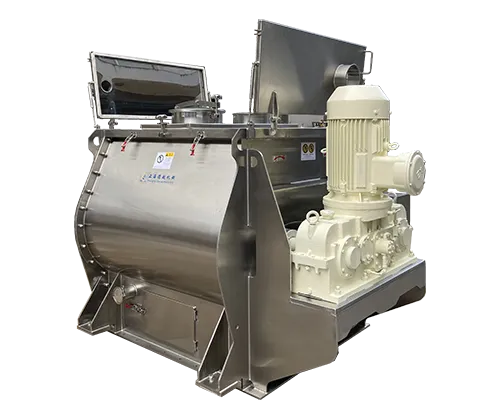
In the realm of solid-liquid and solid-solid mixing, achieving homogeneity with minimal energy consumption is a critical engineering challenge. The double shaft paddle mixer stands out as a robust solution designed for high-efficiency blending, particularly in industries dealing with abrasive, viscous, or heterogeneous materials. Unlike conventional single-shaft agitators, this configuration utilizes two counter-rotating shafts equipped with specially angled paddles to create a complex flow pattern that ensures rapid dispersion and thorough mixing.
DEYUE MACHINERY has engineered these mixers to meet the rigorous demands of modern industrial processing. By optimizing the geometry of the paddles and the rotational speed ratio between the two shafts, we ensure that material is not only mixed but also transported effectively within the vessel. This article explores the technical design features, operational advantages, and diverse industrial applications of the double shaft paddle mixer, providing plant managers and engineers with the insights needed to optimize their production lines.
Technical Design and Operating Principles
The core of the double shaft paddle mixer lies in its dual-shaft architecture. Two horizontal shafts are mounted parallel to each other inside a U-shaped trough. These shafts rotate in opposite directions, typically with one shaft rotating slightly faster than the other (a speed ratio often ranging from 1.1:1 to 1.5:1). This differential speed creates a shearing action between the two streams of material, breaking down agglomerates and ensuring uniform distribution. The paddles are fixed to the shafts at precise angles—usually 45 to 60 degrees relative to the shaft axis—to generate both radial and axial flow components.
Material flow dynamics in this system are characterized by a "figure-eight" circulation pattern. As the paddles lift material from the bottom of the trough, they throw it toward the center where the two shafts meet. Here, the opposing flows interact, causing intense turbulence and particle collision. This mechanism is particularly effective for dry powder mixing, such as cement, mortar, and chemical additives, as well as for wet granulation processes. The design minimizes dead zones, ensuring that even cohesive or sticky materials are fully incorporated without requiring excessive mechanical force.
Structural integrity is maintained through heavy-duty bearings and gearboxes specifically designed to handle high torque loads. The trough is often lined with wear-resistant materials, such as manganese steel or specialized rubber, to extend service life when processing abrasive substances like sand or gravel. Additionally, the discharge gate at the bottom of the trough is typically pneumatically or hydraulically operated, allowing for quick and complete emptying of the batch, which is crucial for maintaining cycle times in continuous production environments.
Key Performance Advantages Over Single-Shaft Systems
When comparing mixing technologies, the efficiency gains of a double shaft configuration are significant. One of the primary advantages is the reduced mixing time. Due to the enhanced shear forces and improved material transport, a double shaft paddle mixer can achieve homogeneity up to 30-50% faster than equivalent capacity single-shaft mixers. This translates directly into higher throughput and lower energy costs per ton of product processed.
Another critical benefit is the versatility in handling varying material consistencies. Single-shaft mixers often struggle with highly viscous pastes or dense granular mixes, leading to motor overload or incomplete blending. The dual-shaft design distributes the load across two drive units, balancing the torque requirements and preventing stagnation. This makes it ideal for applications involving sludge dewatering, fertilizer granulation, and plastic recycling, where material density and viscosity can fluctuate.
- Homogeneity: Achieves mixing uniformity coefficients of >98% for dry powders.
- Energy Efficiency: Optimized paddle geometry reduces power consumption by up to 20% compared to ribbon blenders.
- Maintenance: Modular paddle designs allow for easy replacement of worn components without dismantling the entire shaft assembly.
- Cleanability: Open-top design and smooth trough surfaces facilitate rapid cleaning between batches, reducing cross-contamination risks.
Industrial Applications and Material Compatibility
The application scope of the double shaft paddle mixer spans multiple heavy industries. In the construction sector, it is extensively used for producing pre-mixed mortars, tile adhesives, and waterproofing compounds. The mixer’s ability to handle fine powders like fly ash and silica fume while incorporating liquid binders makes it indispensable in ready-mix concrete plants.
In agriculture, these mixers are vital for producing compound fertilizers and animal feed. The gentle yet effective mixing action preserves the integrity of granular ingredients, preventing breakage while ensuring uniform nutrient distribution. Similarly, in the chemical industry, the mixer is employed for blending pigments, plastics, and corrosion inhibitors. The stainless steel variants are available for food-grade applications, meeting strict hygiene standards for processing spices, salt, and sugar blends.
Waste management and environmental engineering also benefit from this technology. The mixer is used in soil remediation projects to blend contaminated soil with stabilizing agents or bio-remediation cultures. Its high torque capability allows it to process heavy, wet soils that would jam less powerful mixing equipment. Furthermore, in recycling facilities, it efficiently mixes shredded plastics with additives before extrusion, ensuring consistent material properties in the final recycled products.
Selection Criteria and Maintenance Best Practices
Selecting the right double shaft paddle mixer requires careful consideration of material properties, batch volume, and desired output rate. Engineers must evaluate the bulk density, particle size distribution, and moisture content of the material. For abrasive materials, selecting a mixer with hardened steel paddles and a wear-resistant trough lining is essential. Additionally, the motor power must be calculated based on the specific resistance of the material to prevent stalling during peak load conditions.
| Parameter | Standard Specification | Impact on Performance |
|---|---|---|
| Shaft Speed Ratio | 1.1:1 to 1.5:1 | Higher ratios increase shear but may cause particle attrition. |
| Paddle Angle | 45° - 60° | Optimizes forward movement vs. lifting capacity. |
| Filling Degree | 60% - 80% | Overfilling reduces mixing efficiency; underfilling wastes energy. |
Maintenance of the mixer is straightforward but requires regular attention to critical components. Daily checks should include monitoring bearing temperatures and vibration levels, as excessive heat can indicate lubrication failure or misalignment. The gearbox oil should be changed after the initial 500 hours of operation and subsequently every 2,000-3,000 hours depending on operating intensity. Paddle wear should be inspected monthly; replacing worn paddles promptly maintains the designed flow pattern and prevents uneven mixing.
Conclusion: Optimizing Your Mixing Process
The double shaft paddle mixer represents a pinnacle of industrial mixing technology, offering superior efficiency, versatility, and durability for a wide range of materials. Whether you are producing high-performance construction chemicals, blending agricultural fertilizers, or managing waste remediation projects, DEYUE MACHINERY provides tailored solutions that enhance your operational productivity.
By understanding the technical nuances of paddle geometry, shaft rotation, and material flow, engineers can select the optimal configuration for their specific needs. Regular maintenance and proper operational practices further extend the lifespan of the equipment, ensuring consistent performance over years of heavy use.
Contact DEYUE MACHINERY today to discuss your mixing requirements. Our team of experts is ready to provide customized engineering solutions, detailed technical specifications, and competitive pricing for your next industrial mixing project. Reach out via email at [email protected] or visit our website for more information.
label:
related news