English
 Español
 Русский
 لالعربية

Pneumatic Discharge Mixer: Leak-Free Fine Powder Handling
release time:
2026-07-12
Achieve dust-free mixing with our pneumatic discharge mixer. Explore diaphragm technology, leak-free operation, and technical specs for industrial powder handling.
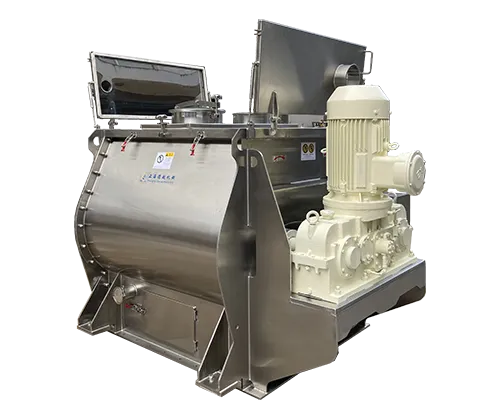
Pneumatic Discharge Mixer: Leak-Free Operation for Fine Powder Handling
Leakage rates exceeding 50 grams per hour in fine powder processing can result in annual material losses surpassing $15,000, not to mention the significant regulatory fines associated with airborne particulate emissions. For plant managers overseeing high-efficiency production lines, maintaining a hermetic seal during the discharge phase is not merely a convenience—it is a fundamental requirement for operational integrity.
The traditional reliance on manual gate valves or basic rotary airlocks often introduces bottlenecks and contamination risks. A pneumatic discharge mixer addresses these inefficiencies by integrating precise flow control with absolute containment. This technology ensures that sensitive materials, such as pharmaceutical ingredients, food additives, and specialty chemicals, remain isolated from environmental contaminants while allowing for consistent, pulse-free discharge.
Understanding Pneumatic Discharge Technology
At the core of advanced powder handling is the mechanism that bridges the mixing chamber and the collection vessel. Unlike mechanical seals that suffer from wear and tear, a pneumatic valve mixer utilizes compressed air to actuate flexible diaphragms or flaps. This design eliminates metal-to-metal contact at the sealing point, thereby preventing the generation of metallic particles—a critical factor in cleanroom environments.
The term air discharge mixer refers to systems where the discharge event is synchronized with the pneumatic cycle. When the mixing process completes, a signal triggers the solenoid valves. Compressed air expands a rubber or PTFE-coated diaphragm, opening the outlet port. Once the material has flowed, the air pressure releases, and the diaphragm snaps back to its original position, creating a tight, dust-free seal. This cycle can occur hundreds of times per day without degradation of the sealing surface.
Key Components and Technical Specifications
To ensure reliability, engineers must evaluate the specific components that constitute a high-performance powder discharge valve. The following table outlines the critical technical parameters that distinguish industrial-grade equipment from standard solutions.
| Component | Standard Specification | Industrial Grade (DEYUE Standard) |
|---|---|---|
| Diaphragm Material | Nitrile Rubber (NBR) | PTFE-Coated EPDM or Silicone (FDA/USP Class VI) |
| Actuation Pressure | 4–6 bar | Optimized 6–8 bar for rapid response |
| Seal Integrity | Visible dust emission | < 0.1 g/hour leakage rate |
| Cycle Time | 1.5 seconds | 0.5–0.8 seconds |
| Connection Type | Tri-clamp only | Tri-clamp, Flange (ISO/DIN), or Sanitary Weld |
The choice of diaphragm material is paramount. In applications involving abrasive powders like titanium dioxide or silica, a standard NBR diaphragm may degrade within weeks. An diaphragm discharge mixer equipped with reinforced PTFE offers superior abrasion resistance and chemical inertness, ensuring a lifespan exceeding 10,000 cycles before replacement is required.
Benefits of Dust-Free Mixing Operations
Implementing a robust pneumatic discharge system delivers tangible benefits across safety, quality, and maintenance metrics.
1. Enhanced Occupational Health and Safety (OHS)
Fine powders, particularly those with particle sizes below 10 microns, pose serious respiratory hazards. By eliminating leaks at the discharge point, the risk of inhalation exposure is drastically reduced. Furthermore, containing combustible dusts prevents the formation of explosive atmospheres within the plant, complying with ATEX directives and NFPA standards.
2. Product Quality and Yield Protection
In industries such as nutraceuticals and electronics, cross-contamination is a critical failure mode. A leaky valve allows ambient air—and potentially microbes or moisture—to enter the product stream. The hermetic nature of a pneumatic valve mixer ensures that the product remains pure from mixing to packaging. Additionally, reducing material loss directly improves yield, often paying for the equipment upgrade within 12 months of operation.
3. Reduced Maintenance Downtime
Mechanical flap valves require frequent lubrication and adjustment due to friction. Pneumatic systems have fewer moving parts and no friction-based seals. Routine inspection intervals can be extended to every 6 months, compared to monthly checks for mechanical alternatives. This reduction in maintenance frequency translates to higher overall equipment effectiveness (OEE).
Selecting the Right System for Your Application
Not all pneumatic discharge mixers are created equal. Engineers must consider the bulk density, fluidization characteristics, and corrosiveness of the powder. For cohesive powders that tend to bridge, the discharge port diameter should be sized at least 3–5 times the largest particle size to ensure gravity flow. In cases where air entrainment is a concern, integrated de-aeration chambers can be added to the mixer body.
Furthermore, the control interface should support integration with PLCs for automated batch sequencing. The ability to monitor cycle counts and air pressure diagnostics allows for predictive maintenance, preventing unexpected failures during high-volume production runs.
Future Trends in Powder Processing
The trajectory of industrial powder handling is moving toward greater automation and digital connectivity. Future iterations of pneumatic discharge mixers will likely incorporate IoT-enabled sensors that monitor diaphragm fatigue in real-time, adjusting actuation pressure dynamically to compensate for wear. As regulations regarding particulate matter tighten globally, the demand for zero-emission discharge solutions will drive innovation in elastomer chemistry and valve geometry, making fully enclosed, pneumatically actuated systems the new industry standard.
Reach out to our team to discuss your mixing requirements
Phone: +86 13917895463
Email: [email protected]
Website: https://www.deyuemixer.com/
label:
related news