Batch Mixer vs Continuous Mixer: Choosing Industrial Mixing Methods


release time:

2026-07-07

Compare batch mixer vs continuous mixer for industrial mixing methods. Analyze batch processing vs continuous mixing for efficiency, quality, and ROI.

Batch Mixer vs Continuous Mixer: A Technical Comparison of Industrial Mixing Methods

Selecting the right industrial mixing equipment is one of the most critical decisions plant managers and engineering teams face. The choice between batch processing and continuous mixing directly impacts production throughput, product consistency, operational costs, and overall return on investment. While both industrial mixing methods serve the fundamental purpose of homogenizing materials, their underlying mechanics and ideal applications differ significantly.

This article provides a deep dive into the batch mixer vs continuous mixer debate, analyzing technical specifications, operational workflows, and economic factors to help procurement specialists make informed capital expenditure decisions.

Understanding Batch Processing

Batch processing involves loading a specific quantity of raw materials into a mixing vessel, agitating them until the desired homogeneity is achieved, and then discharging the finished product before starting the next cycle. This method is characterized by its discrete nature, where each "batch" is treated as an individual unit of production.

Technical Characteristics of Batch Mixers

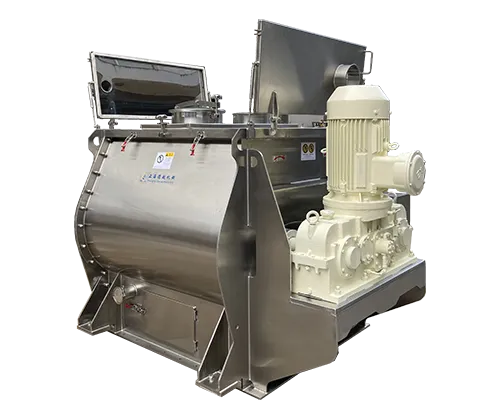
In a typical batch mixer setup, such as a double-shaft paddle mixer or a planetary mixer, the mixing time is determined by the volume of the material and the specific rheological properties of the blend. Engineers must account for fill ratios, often limiting the load to 60-70% of the vessel's total capacity to allow for proper material movement and shear generation.

The primary advantage of this approach is flexibility. It allows for rapid changeovers between different formulations without extensive cleaning downtime, provided the materials are compatible. This makes batch mixers indispensable in industries like pharmaceuticals, specialty chemicals, and high-value food products where small lot sizes and strict quality control are paramount.

Operational Considerations

However, batch processing introduces inherent inefficiencies related to idle time. The cycle includes loading, mixing, and unloading phases. During the loading and unloading stages, the machine is not actively mixing, which reduces overall equipment effectiveness (OEE). Furthermore, ensuring uniform quality across multiple batches can sometimes be challenging due to slight variations in loading precision or ambient conditions.

The Mechanics of Continuous Mixing

Continuous mixing represents a shift towards steady-state operation. Raw materials are fed into the mixer at a constant rate and discharged at a corresponding rate. The material moves through the mixing chamber, undergoing progressive blending until it exits as a finished product.

Technical Advantages of Continuous Systems

Continuous mixers, such as twin-screw extruders or horizontal ribbon mixers designed for flow-through operations, excel in high-volume production environments. The key technical benefit is the elimination of cycle times. Once the system reaches equilibrium, production is uninterrupted, leading to higher throughput and better energy efficiency per unit of product.

From a process control perspective, continuous mixing offers superior consistency. Advanced sensors can monitor temperature, pressure, and torque in real-time, allowing for immediate adjustments to feed rates or shaft speeds. This closed-loop control ensures that every gram of output meets the exact same specification, reducing waste and rework.

Limitations and Challenges

The main drawback of continuous systems is the complexity of startup and shutdown procedures. Achieving steady-state mixing conditions can take time, and any disruption in the feed stream can lead to significant quality deviations. Additionally, changing formulations requires thorough purging of the system, which can result in material loss and increased cleaning time compared to batch systems.

Comparative Analysis: Batch vs. Continuous

To facilitate a clear decision-making process, we have compiled a technical comparison of these two industrial mixing methods.

FeatureBatch MixerContinuous Mixer
Production VolumeLow to MediumHigh to Very High
Changeover FlexibilityHigh (Quick recipe changes)Low (Requires purging)
Consistency ControlGood (Dependent on cycle timing)Excellent (Real-time process control)
Energy EfficiencyLower (Cyclical heating/cooling)Higher (Steady-state operation)
FootprintCompactLarger (Often requires conveyors)
Best ForPharma, Specialty Chemicals, R&DCement, Plastics, Bulk Food Ingredients

Strategic Selection Criteria for Procurement Specialists

When evaluating the batch mixer vs continuous mixer landscape, procurement teams must look beyond the initial capital cost. The total cost of ownership (TCO) includes energy consumption, labor, maintenance, and material waste.

  • Volume Requirements: If annual demand exceeds the capacity of a single batch cycle efficiently, continuous mixing is usually the only viable option.
  • Product Sensitivity: Heat-sensitive materials may benefit from the shorter residence times found in some continuous mixers, or conversely, from the precise temperature control of large batch vessels.
  • Regulatory Compliance: Industries with strict traceability requirements often prefer batch processing because each lot can be individually tracked and tested.

Conclusion

The decision between batch and continuous mixing is not merely a technical preference but a strategic business choice. Batch mixers offer unparalleled flexibility and quality assurance for diverse, lower-volume productions, while continuous mixers drive efficiency and consistency in high-volume manufacturing. By understanding the nuances of industrial mixing methods, engineers and managers can select equipment that aligns perfectly with their operational goals.

For expert guidance on selecting the optimal mixing solution for your specific application, contact our engineering team today.

Contact Us:

Phone: +86 13917895463
Email: [email protected]
Website: https://www.deyuemixer.com/

label:


If you want to know more about the details of a certain company, please visit our official website where there is comprehensive and in-depth information for you to check!


Copyright © 2012-2026 Shanghai Deyue Powder Machinery Co., Ltd. All rights reserved

Leave your message

If you have any suggestions or questions for us, please feel free to contact us!

DJH Double-Shaft Paddle Mixer
We use cookie to improve your online experience. By continuing to browse this website, you agree to our use of cookie.

Cookies

Please read our Terms and Conditions and this Policy before accessing or using our Services. If you cannot agree with this Policy or the Terms and Conditions, please do not access or use our Services. If you are located in a jurisdiction outside the European Economic Area, by using our Services, you accept the Terms and Conditions and accept our privacy practices described in this Policy.
We may modify this Policy at any time, without prior notice, and changes may apply to any Personal Information we already hold about you, as well as any new Personal Information collected after the Policy is modified. If we make changes, we will notify you by revising the date at the top of this Policy. We will provide you with advanced notice if we make any material changes to how we collect, use or disclose your Personal Information that impact your rights under this Policy. If you are located in a jurisdiction other than the European Economic Area, the United Kingdom or Switzerland (collectively “European Countries”), your continued access or use of our Services after receiving the notice of changes, constitutes your acknowledgement that you accept the updated Policy. In addition, we may provide you with real time disclosures or additional information about the Personal Information handling practices of specific parts of our Services. Such notices may supplement this Policy or provide you with additional choices about how we process your Personal Information.


Cookies

Cookies are small text files stored on your device when you access most Websites on the internet or open certain emails. Among other things, Cookies allow a Website to recognize your device and remember if you've been to the Website before. Examples of information collected by Cookies include your browser type and the address of the Website from which you arrived at our Website as well as IP address and clickstream behavior (that is the pages you view and the links you click).We use the term cookie to refer to Cookies and technologies that perform a similar function to Cookies (e.g., tags, pixels, web beacons, etc.). Cookies can be read by the originating Website on each subsequent visit and by any other Website that recognizes the cookie. The Website uses Cookies in order to make the Website easier to use, to support a better user experience, including the provision of information and functionality to you, as well as to provide us with information about how the Website is used so that we can make sure it is as up to date, relevant, and error free as we can. Cookies on the Website We use Cookies to personalize your experience when you visit the Site, uniquely identify your computer for security purposes, and enable us and our third-party service providers to serve ads on our behalf across the internet.

We classify Cookies in the following categories:
 ●  Strictly Necessary Cookies
 ●  Performance Cookies
 ●  Functional Cookies
 ●  Targeting Cookies


Cookie List
A cookie is a small piece of data (text file) that a website – when visited by a user – asks your browser to store on your device in order to remember information about you, such as your language preference or login information. Those cookies are set by us and called first-party cookies. We also use third-party cookies – which are cookies from a domain different than the domain of the website you are visiting – for our advertising and marketing efforts. More specifically, we use cookies and other tracking technologies for the following purposes:

Strictly Necessary Cookies
These cookies are necessary for the website to function and cannot be switched off in our systems. They are usually only set in response to actions made by you which amount to a request for services, such as setting your privacy preferences, logging in or filling in forms. You can set your browser to block or alert you about these cookies, but some parts of the site will not then work. These cookies do not store any personally identifiable information.

Functional Cookies
These cookies enable the website to provide enhanced functionality and personalisation. They may be set by us or by third party providers whose services we have added to our pages. If you do not allow these cookies then some or all of these services may not function properly.

Performance Cookies
These cookies allow us to count visits and traffic sources so we can measure and improve the performance of our site. They help us to know which pages are the most and least popular and see how visitors move around the site. All information these cookies collect is aggregated and therefore anonymous. If you do not allow these cookies we will not know when you have visited our site, and will not be able to monitor its performance.

Targeting Cookies
These cookies may be set through our site by our advertising partners. They may be used by those companies to build a profile of your interests and show you relevant adverts on other sites. They do not store directly personal information, but are based on uniquely identifying your browser and internet device. If you do not allow these cookies, you will experience less targeted advertising.

How To Turn Off Cookies
You can choose to restrict or block Cookies through your browser settings at any time. Please note that certain Cookies may be set as soon as you visit the Website, but you can remove them using your browser settings. However, please be aware that restricting or blocking Cookies set on the Website may impact the functionality or performance of the Website or prevent you from using certain services provided through the Website. It will also affect our ability to update the Website to cater for user preferences and improve performance. Cookies within Mobile Applications

We only use Strictly Necessary Cookies on our mobile applications. These Cookies are critical to the functionality of our applications, so if you block or delete these Cookies you may not be able to use the application. These Cookies are not shared with any other application on your mobile device. We never use the Cookies from the mobile application to store personal information about you.

If you have questions or concerns regarding any information in this Privacy Policy, please contact us by email at . You can also contact us via our customer service at our Site.