English
 Español
 Русский
 لالعربية

Nanoparticle Dispersion Mixer: Challenges & Solutions
release time:
2026-07-07
Optimize nanoparticle dispersion with industrial mixers. Compare high-shear vs ultrasonic tech. Expert guide for plant managers and engineers.
Nanoparticle Dispersion in Industrial Mixers: Challenges and Solutions
In the realm of advanced materials science, the ability to uniformly disperse nanoparticles within a liquid or solid matrix is critical. Whether producing conductive inks, high-performance coatings, pharmaceutical suspensions, or composite materials, achieving stable nanoparticle dispersion is often the bottleneck between lab success and mass production. For plant managers and process engineers, understanding the mechanics behind effective nanoparticle mixing is not just beneficial—it is essential for product quality and operational efficiency.
This article explores the technical challenges associated with nano-scale agglomeration and evaluates the most effective nano mixing technology available in modern industrial settings.
The Physics of Nano-Agglomeration
Nanoparticles, defined by dimensions typically under 100 nanometers, possess an exceptionally high surface-area-to-volume ratio. This characteristic leads to intense van der Waals forces and electrostatic interactions, causing particles to aggressively clump together into agglomerates. Unlike macroscopic mixing, where bulk fluid motion suffices, nanoparticle dispersion requires overcoming these inter-particle forces through specific energy input mechanisms.
If the energy applied is insufficient, agglomerates remain intact, leading to inconsistent product properties, clogged filters, and poor final performance. Conversely, excessive shear can damage sensitive nanoparticles or degrade the carrier fluid. The goal of any nanoparticle dispersion mixer is to deliver precise, controlled energy to break agglomerates without causing secondary aggregation.
Key Challenges in Industrial Processing
Scaling up nanoparticle mixing from laboratory beakers to industrial reactors introduces several complex variables:
- Heat Generation: High-energy mixing generates significant frictional heat. Many nanomaterials and organic carriers are temperature-sensitive, requiring sophisticated cooling systems.
- Viscosity Changes: As nanoparticle concentration increases, the viscosity of the slurry rises non-linearly. Standard impellers may stall or fail to create the necessary turbulence.
- Wetting Efficiency: Ensuring that the carrier fluid completely wets the hydrophobic surfaces of many metal oxide or carbon-based nanoparticles is a primary step before dispersion can occur.
- Erosion and Wear: Hard nanoparticles like silica or alumina can cause rapid wear on mixer components, increasing maintenance costs and contamination risks.
Evaluating Mixing Technologies
Not all mixers are created equal when it comes to nano-scale applications. Selecting the right equipment depends on the rheology of the material and the desired particle size reduction. Below is a comparison of common technologies used in nano mixing technology.
| Technology | Mechanism | Best For | Limitations |
|---|---|---|---|
| High-Shear Rotor-Stator | Circulation through tight clearance between rotor and stator | General purpose slurries, moderate viscosity | Limited to ~100nm; high heat generation |
| Bead Mill / Sand Mill | Impact and attrition via grinding media beads | Aggressive de-agglomeration, sub-micron sizes | Media contamination risk; complex cleaning |
| Ultrasonic Homogenization | Cavitation bubbles collapse to create shockwaves | Small batches, delicate biological samples | Poor scalability; high energy cost per volume |
| Planetary Centrifugal Mixers | High G-force combined with vacuum degassing | High-viscosity pastes, vacuum processing | Batch-only; limited throughput for low viscosity |
Solution: Advanced Continuous Dispersion Systems
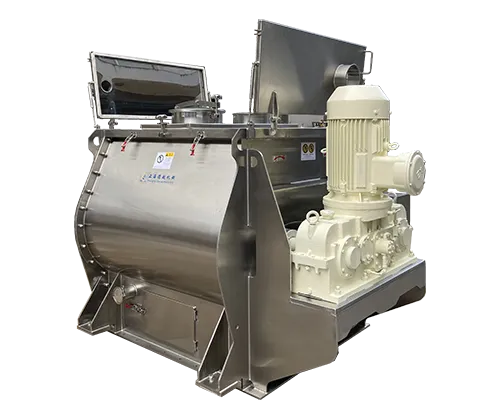
For continuous industrial production, advanced nanoparticle dispersion mixer designs that combine high-shear rotor-stator technology with multi-stage processing offer the best balance of efficiency and quality. Modern systems feature:
- Multi-Pass Circulation: Allowing the material to pass through the high-shear zone multiple times ensures consistent particle size distribution without needing extreme single-pass energy.
- Variable Frequency Drives (VFD): Precise control over rotor speed allows operators to adjust shear rate dynamically based on real-time viscosity changes.
- Jacketed Housings: Integrated cooling jackets manage the heat generated during intense nanoparticle mixing, preserving the integrity of thermal-sensitive formulations.
- CIP/SIP Capability: Clean-in-Place and Sterilize-in-Place features reduce downtime between batches, crucial for pharmaceutical and food-grade applications.
Implementation Strategy for Engineers
To successfully implement nano mixing technology in your facility, follow these engineering best practices:
- Pre-dispersion: Use low-shear mixing to wet the powders before introducing high-shear energy. This prevents dust and ensures uniform fluid penetration.
- Viscosity Matching: Adjust the carrier fluid’s viscosity to optimize the Reynolds number, ensuring turbulent flow patterns that maximize collision frequency between particles.
- Particle Size Analysis: Implement inline or frequent offline laser diffraction analysis to monitor the d50 and d90 particle sizes, adjusting mixer speed and residence time accordingly.
- Surface Modification: Consider adding dispersants or surfactants that lower the surface tension, making it easier for the nanoparticle dispersion mixer to separate agglomerates.
Conclusion
Achieving stable nanoparticle dispersion is a complex but manageable challenge. By understanding the physics of agglomeration and selecting the appropriate nanoparticle mixing equipment, manufacturers can produce high-quality nanomaterials at scale. The key lies in balancing shear intensity, heat management, and process control.
For plant managers seeking to upgrade their production capabilities, investing in a robust, scalable nanoparticle dispersion mixer is a strategic move toward superior product consistency and competitive advantage. Partnering with experienced equipment manufacturers ensures that your specific rheological needs are met with tailored engineering solutions.
Contact Us for Custom Mixing Solutions
If you are facing challenges with particle agglomeration or need to scale your nano mixing technology to industrial levels, our team of engineers is ready to assist. We provide expert consultation, custom mixer design, and comprehensive support to optimize your production process.
Get in touch with us today:
Phone: +86 13917895463
Email: [email protected]
Website:https://www.deyuemixer.com/
label:
related news