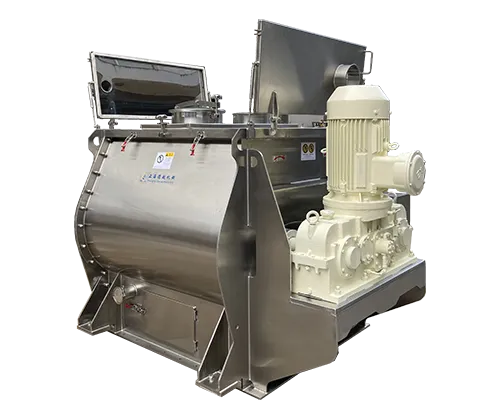
Pneumatic Discharge Mixer: Fast, Clean & Efficient Handling


release time:

2026-07-04

Discover how pneumatic discharge mixers optimize material handling. Compare features, benefits, and specs for plant efficiency. Get a quote today.

Pneumatic Discharge Mixers: Fast, Clean, and Efficient Material Handling

In the modern landscape of industrial manufacturing, the efficiency of material handling directly impacts production throughput, product quality, and operational safety. For plant managers and procurement specialists dealing with powders, granules, and viscous fluids, traditional mechanical discharge methods often introduce bottlenecks, contamination risks, and excessive maintenance costs. Enter the pneumatic discharge mixer—a robust solution designed to streamline the mixing and discharge process using compressed air technology.

This article explores the technical advantages, operational mechanisms, and strategic benefits of implementing an air discharge mixer in your facility. By understanding the nuances of pneumatic mixing systems, engineering teams can make informed decisions that enhance overall equipment effectiveness (OEE) while ensuring a cleaner, safer work environment.

The Mechanics of Pneumatic Mixing Systems

Unlike conventional agitators that rely on electric motors driving shafts and impellers, a pneumatic mixing system utilizes compressed air to generate motion. This is typically achieved through two primary mechanisms:

  1. Pneumatic Agitators: These devices use air-powered diaphragm pumps or vortex generators to create turbulence within the vessel, keeping solids suspended or blending components without direct mechanical contact with the product.
  2. Air-Activated Discharge Valves: The core of the pneumatic mixer discharge functionality involves specialized valves that open and close based on air pressure signals. When the mixing cycle is complete, a burst of compressed air triggers the valve to release the contents rapidly and completely.

This dual-action approach ensures that the material remains homogeneous during the process and exits the vessel cleanly, leaving minimal residue behind. For industries such as pharmaceuticals, food processing, and chemical manufacturing, this level of control is critical for maintaining batch consistency and regulatory compliance.

Key Advantages Over Mechanical Alternatives

Selecting the right equipment requires a thorough comparison of operational characteristics. Below is a detailed analysis of why a pneumatic discharge mixer often outperforms traditional mechanical setups in specific industrial applications.

FeaturePneumatic Discharge MixerTraditional Mechanical Mixer
Explosion SafetyHigh (No sparks, intrinsic safety)Low (Motor sparks possible)
Maintenance RequirementsLow (Fewer moving parts)High (Bearings, seals, gears)
Contamination RiskNegligible (No shaft seals)Moderate (Shaft seal leakage)
Discharge EfficiencyRapid, full drainage capabilityResidue often remains
Operational CostDependent on air compression costHigh energy consumption

Enhanced Safety in Hazardous Environments

One of the most compelling reasons to invest in an air discharge mixer is safety. In environments where flammable dusts, volatile solvents, or explosive chemicals are present, electrical motors pose a significant ignition risk. Pneumatic systems, powered solely by compressed air, are inherently explosion-proof. They do not generate heat or sparks, making them the preferred choice for hazardous area classifications (such as Zone 1 and Zone 2).

Superior Hygiene and Cleanability

For industries governed by strict hygiene standards, such as FDA-regulated food and pharma sectors, the design of the pneumatic discharge mixer offers distinct advantages. The absence of long drive shafts penetrating the vessel eliminates potential leak points where bacteria could thrive. Furthermore, many pneumatic mixers are designed for quick-disassembly or are compatible with Clean-in-Place (CIP) systems, allowing for rapid sanitation between batches.

Operational Efficiency and Speed

Time is money in continuous production lines. A pneumatic mixer discharge mechanism can empty a vessel in seconds, whereas mechanical paddles may require minutes to scrape residual material. This speed reduces downtime between batches, increasing the overall throughput of the production line. Additionally, because pneumatic motors can stall without damage if overloaded, they are more forgiving in variable load conditions compared to electric motors that may trip breakers or burn out.

Technical Considerations for Implementation

While the benefits are clear, successful implementation of a pneumatic mixing system requires careful engineering planning. Procurement specialists must consider the following factors:

  • Air Supply Quality: Compressed air must be clean, dry, and oil-free to prevent contamination of the product and ensure the longevity of pneumatic components.
  • Vessel Geometry: The shape of the tank (cylindrical, rectangular, hopper-bottom) dictates the type of agitator and discharge valve needed. Hopper-bottom vessels paired with pneumatic discharge valves offer the most efficient flow.
  • Material Compatibility: Ensure that all wetted parts, including diaphragms and seals, are compatible with the chemical properties of the material being mixed.
  • Control Integration: Modern pneumatic systems can be integrated with PLCs for automated sequencing, allowing for precise control over mixing time and discharge duration.

Conclusion

The transition to a pneumatic discharge mixer represents a strategic upgrade for manufacturers seeking to enhance safety, reduce maintenance burdens, and improve product quality. By leveraging the power of compressed air, facilities can achieve faster cycle times and cleaner operations, ultimately driving down costs and increasing competitiveness.

Whether you are managing a high-volume food production line or a sensitive pharmaceutical batch process, the reliability and precision of pneumatic mixing systems offer a tangible return on investment. It is time to evaluate your current material handling workflows and identify opportunities for pneumatic optimization.

Ready to upgrade your mixing infrastructure? Contact our engineering team today for a customized consultation and quote.

Phone:+86 13917895463
Email:[email protected]
Website:https://www.deyuemixer.com/

label:


If you want to know more about the details of a certain company, please visit our official website where there is comprehensive and in-depth information for you to check!


Copyright © 2012-2026 Shanghai Deyue Powder Machinery Co., Ltd. All rights reserved

Leave your message

If you have any suggestions or questions for us, please feel free to contact us!

DJH Double-Shaft Paddle Mixer
We use cookie to improve your online experience. By continuing to browse this website, you agree to our use of cookie.

Cookies

Please read our Terms and Conditions and this Policy before accessing or using our Services. If you cannot agree with this Policy or the Terms and Conditions, please do not access or use our Services. If you are located in a jurisdiction outside the European Economic Area, by using our Services, you accept the Terms and Conditions and accept our privacy practices described in this Policy.
We may modify this Policy at any time, without prior notice, and changes may apply to any Personal Information we already hold about you, as well as any new Personal Information collected after the Policy is modified. If we make changes, we will notify you by revising the date at the top of this Policy. We will provide you with advanced notice if we make any material changes to how we collect, use or disclose your Personal Information that impact your rights under this Policy. If you are located in a jurisdiction other than the European Economic Area, the United Kingdom or Switzerland (collectively “European Countries”), your continued access or use of our Services after receiving the notice of changes, constitutes your acknowledgement that you accept the updated Policy. In addition, we may provide you with real time disclosures or additional information about the Personal Information handling practices of specific parts of our Services. Such notices may supplement this Policy or provide you with additional choices about how we process your Personal Information.


Cookies

Cookies are small text files stored on your device when you access most Websites on the internet or open certain emails. Among other things, Cookies allow a Website to recognize your device and remember if you've been to the Website before. Examples of information collected by Cookies include your browser type and the address of the Website from which you arrived at our Website as well as IP address and clickstream behavior (that is the pages you view and the links you click).We use the term cookie to refer to Cookies and technologies that perform a similar function to Cookies (e.g., tags, pixels, web beacons, etc.). Cookies can be read by the originating Website on each subsequent visit and by any other Website that recognizes the cookie. The Website uses Cookies in order to make the Website easier to use, to support a better user experience, including the provision of information and functionality to you, as well as to provide us with information about how the Website is used so that we can make sure it is as up to date, relevant, and error free as we can. Cookies on the Website We use Cookies to personalize your experience when you visit the Site, uniquely identify your computer for security purposes, and enable us and our third-party service providers to serve ads on our behalf across the internet.

We classify Cookies in the following categories:
 ●  Strictly Necessary Cookies
 ●  Performance Cookies
 ●  Functional Cookies
 ●  Targeting Cookies


Cookie List
A cookie is a small piece of data (text file) that a website – when visited by a user – asks your browser to store on your device in order to remember information about you, such as your language preference or login information. Those cookies are set by us and called first-party cookies. We also use third-party cookies – which are cookies from a domain different than the domain of the website you are visiting – for our advertising and marketing efforts. More specifically, we use cookies and other tracking technologies for the following purposes:

Strictly Necessary Cookies
These cookies are necessary for the website to function and cannot be switched off in our systems. They are usually only set in response to actions made by you which amount to a request for services, such as setting your privacy preferences, logging in or filling in forms. You can set your browser to block or alert you about these cookies, but some parts of the site will not then work. These cookies do not store any personally identifiable information.

Functional Cookies
These cookies enable the website to provide enhanced functionality and personalisation. They may be set by us or by third party providers whose services we have added to our pages. If you do not allow these cookies then some or all of these services may not function properly.

Performance Cookies
These cookies allow us to count visits and traffic sources so we can measure and improve the performance of our site. They help us to know which pages are the most and least popular and see how visitors move around the site. All information these cookies collect is aggregated and therefore anonymous. If you do not allow these cookies we will not know when you have visited our site, and will not be able to monitor its performance.

Targeting Cookies
These cookies may be set through our site by our advertising partners. They may be used by those companies to build a profile of your interests and show you relevant adverts on other sites. They do not store directly personal information, but are based on uniquely identifying your browser and internet device. If you do not allow these cookies, you will experience less targeted advertising.

How To Turn Off Cookies
You can choose to restrict or block Cookies through your browser settings at any time. Please note that certain Cookies may be set as soon as you visit the Website, but you can remove them using your browser settings. However, please be aware that restricting or blocking Cookies set on the Website may impact the functionality or performance of the Website or prevent you from using certain services provided through the Website. It will also affect our ability to update the Website to cater for user preferences and improve performance. Cookies within Mobile Applications

We only use Strictly Necessary Cookies on our mobile applications. These Cookies are critical to the functionality of our applications, so if you block or delete these Cookies you may not be able to use the application. These Cookies are not shared with any other application on your mobile device. We never use the Cookies from the mobile application to store personal information about you.

If you have questions or concerns regarding any information in this Privacy Policy, please contact us by email at . You can also contact us via our customer service at our Site.