English
 Español
 Русский
 لالعربية

Spiral Mixer Technology: High-Viscosity Blending Efficiency
release time:
2026-07-05
Discover how spiral mixer technology optimizes high-viscosity material blending. Technical insights for plant managers on efficiency, consistency, and ROI.
Spiral Mixer Technology: Advantages for High-Viscosity Material Blending
In the realm of industrial manufacturing, the efficiency of the mixing process is often the bottleneck that determines overall production throughput and product quality. For industries dealing with doughs, pastes, adhesives, sealants, and chemical compounds, standard agitation methods frequently fall short. This is where spiral mixer technology emerges as the superior solution. By leveraging unique mechanical dynamics, this equipment addresses the complex rheological challenges associated with high-viscosity materials, ensuring uniformity while minimizing energy consumption and wear.
This article provides a deep dive into the engineering principles behind spiral mixing, comparing its performance against traditional methods, and outlining why it is the preferred choice for modern plant managers and procurement specialists seeking operational excellence.
The Engineering Behind Spiral Mixing
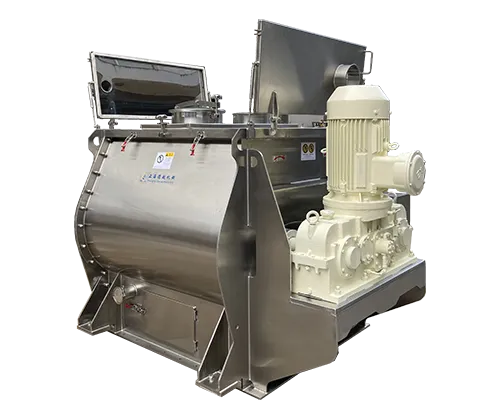
At its core, a spiral blender operates on a dual-motion principle that distinguishes it from conventional paddle or screw mixers. The system typically consists of two main components: a stationary or slowly rotating bowl and a spiral-shaped agitator (auger). The agitator performs two simultaneous movements:
- Rotation around the central axis: The spiral shaft rotates, moving the material horizontally across the bottom of the bowl.
- Self-rotation: The spiral shaft itself rotates on its own axis, lifting and folding the material vertically.
This dual-action mechanism creates a continuous kneading and folding effect. Unlike high-shear mixers that rely on speed to break down particles, spiral mixing relies on volume displacement and gentle yet thorough mechanical pressure. This makes it ideal for high viscosity mixer applications where maintaining the structural integrity of the ingredients is crucial.
Why High Viscosity Materials Require Specialized Handling
High-viscosity materials, such as epoxy resins, silicone rubbers, or heavy-duty mortar, exhibit non-Newtonian flow properties. Their resistance to flow increases under stress, making them difficult to blend uniformly. In traditional mixers, dead zones often form near the walls and bottom of the container, leading to inconsistent mixing. Spiral mixing eliminates these dead zones because the spiral agitator is designed to fit closely to the bowl's contour, ensuring that every particle of material is subjected to shear and compression forces.
Comparative Analysis: Spiral vs. Traditional Mixing Technologies
To understand the value proposition of spiral mixer technology, it is essential to compare it with other common industrial mixing solutions. The following table highlights key performance metrics relevant to engineering decision-making.
| Feature | Spiral Mixer | Paddle Mixer | High-Shear Mixer |
|---|---|---|---|
| Viscosity Range | Very High to Ultra-High | Low to Medium | Medium to High |
| Mixing Action | Kneading, Folding, Shearing | Stirring, Dispersing | Intense Shearing, Emulsifying |
| Heat Generation | Low (Energy Efficient) | Low | High (Requires Cooling) |
| Homogeneity | Excellent (No Dead Zones) | Poor to Moderate | Good (For Liquids) |
| Material Integrity | Preserved (Gentle Kneading) | Preserved | Can Be Damaged (High Stress) |
Key Advantages for Industrial Operations
Implementing spiral mixer technology offers tangible benefits that directly impact the bottom line for manufacturing facilities. These advantages extend beyond simple mixing capability to include operational efficiency, maintenance costs, and product quality control.
1. Superior Homogeneity and Consistency
For plant managers, batch-to-batch consistency is critical. The unique geometry of the spiral agitator ensures that dense materials are constantly moved from the bottom to the top and vice versa. This thorough turnover results in a homogeneous mixture without the need for excessive processing time. Whether blending automotive adhesives or food-grade doughs, the result is a uniform product with no unmixed pockets.
2. Energy Efficiency and Thermal Management
One of the most significant technical advantages of a high viscosity mixer using spiral technology is its low energy consumption relative to output. Because the mixing action is mechanical rather than hydraulic or aerodynamic, less power is lost to friction and turbulence. Furthermore, the gentle kneading action generates minimal heat. This is particularly important for thermally sensitive materials, such as certain polymers or pharmaceutical compounds, which might degrade or cure prematurely if exposed to the high temperatures generated by high-shear alternatives.
3. Reduced Wear and Tear
Traditional impellers often suffer from rapid wear when processing abrasive or highly viscous substances. The spiral design distributes the load more evenly across the agitator and the bowl. Additionally, many modern spiral mixers feature automated scrapers that maintain a consistent gap between the agitator and the bowl wall, preventing material buildup and reducing the mechanical strain on the drive system. This leads to longer equipment lifespan and lower maintenance costs for procurement teams.
4. Versatility in Formulations
The adaptability of spiral mixing allows manufacturers to handle a wide range of viscosities within a single unit. From thick pastes and slurries to stiff doughs and greases, the machine can adjust its speed and torque to accommodate different material densities. This versatility reduces the need for multiple specialized machines, optimizing floor space and capital expenditure.
Technical Considerations for Implementation
When evaluating spiral mixer technology for your facility, engineers should consider several technical parameters. The motor power must be matched to the specific gravity and viscosity of the target material. Variable Frequency Drives (VFDs) are highly recommended to allow precise control over the agitator speed, enabling optimization for different batch sizes and material characteristics.
Furthermore, the construction material of the bowl and agitator is crucial. Stainless steel grades (such as AISI 304 or 316L) are standard for hygiene and corrosion resistance, especially in food and pharmaceutical applications. For abrasive industrial chemicals, hardened steel or specialized coatings may be required to extend service life.
Conclusion
The adoption of spiral mixer technology represents a strategic upgrade for manufacturers dealing with challenging material properties. By offering superior homogeneity, energy efficiency, and gentle handling of high-viscosity substances, spiral blenders provide a robust solution that enhances product quality and operational efficiency. For plant managers and engineers looking to optimize their mixing processes, investing in advanced spiral mixing equipment is not just a technical upgrade—it is a business imperative.
If you are ready to transform your mixing operations with state-of-the-art equipment, contact our engineering team today for a customized consultation.
Contact Us:
Phone: +86 13917895463
Email: [email protected]
Website: https://www.deyuemixer.com/
label:
related news