English
 Español
 Русский
 لالعربية

Ribbon Mixer Maintenance Best Practices for Optimal Industrial Performance
release time:
2026-06-26
In the demanding world of industrial processing, the reliability of your powder blending equipment is paramount. For manufacturers utilizing ribbon mixer mainte
Ribbon Mixer Maintenance Best Practices for Optimal Industrial Performance
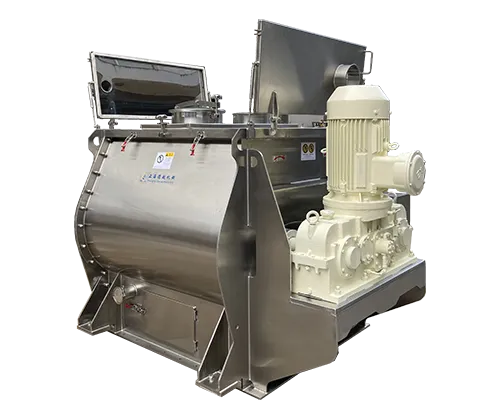
In the demanding world of industrial processing, the reliability of your powder blending equipment is paramount. For manufacturers utilizing ribbon mixer maintenance protocols, the difference between seamless production and costly downtime is often defined by proactive care rather than reactive repair. DEYUE MACHINERY understands that a ribbon blender is not merely a static vessel but a dynamic mechanical system where precision engineering meets abrasive reality. Neglecting routine checks can lead to accelerated wear on critical components such as the shaft, bearings, and discharge valves, ultimately compromising product homogeneity and increasing energy consumption.
This comprehensive guide outlines the essential procedures for maintaining your ribbon blender. By adhering to these technical best practices, facility managers can extend equipment lifespan, ensure consistent batch quality, and minimize unexpected failures. Whether you are dealing with food-grade powders, chemical granules, or pharmaceutical ingredients, a disciplined approach to mixer maintenance is the cornerstone of operational efficiency.
Daily Operational Checks and Cleaning Protocols
The foundation of effective ribbon mixer maintenance begins before the machine is even powered on. Daily inspections must include a thorough visual check of the drive unit, including the motor, reducer, and coupling. Operators should listen for unusual noises during startup, which may indicate misalignment or insufficient lubrication. It is critical to verify that the safety guards are securely in place and that the emergency stop mechanisms function correctly. Any signs of oil leaks around the gearbox seals or excessive vibration during operation should be addressed immediately to prevent catastrophic failure of the rotating assembly.
Cleaning procedures are equally vital, particularly when switching between different material batches or colors. Residual powder can harden inside the U-shaped trough, leading to cross-contamination and reduced mixing efficiency. For dry mixers, a pneumatic cleaning system or manual brushing is recommended, ensuring that no debris remains in the dead zones near the agitator ends. In cases involving sticky or hygroscopic materials, a damp cloth or approved solvent wipe-down may be necessary, followed by complete drying to prevent rust on the stainless steel surfaces. Proper cleaning not only maintains hygiene standards but also allows operators to inspect the ribbon blades for damage or deformation that might have occurred during previous cycles.
Lubrication Management and Bearing Care
Lubrication is the lifeblood of any heavy-duty industrial machinery. The bearings supporting the main shaft are subjected to significant radial and axial loads, making proper grease selection and application intervals crucial. DEYUE MACHINERY recommends using high-quality lithium-based or calcium-sulfonate complex greases, depending on the operating temperature and environmental conditions. Over-lubrication can be as detrimental as under-lubrication, as it can cause churning heat buildup and seal failure. A strict schedule based on operating hours—typically every 200 to 500 hours of continuous use—should be established and documented.
When performing bearing maintenance, it is essential to purge old grease completely before introducing fresh lubricant to prevent contamination. Check the condition of the shaft seals regularly; worn seals allow contaminants like dust and moisture to enter the bearing housing, accelerating corrosion and wear. Additionally, monitor the gearbox oil levels monthly. The reducer requires a specific viscosity grade oil to ensure smooth gear engagement. If the oil appears milky or contains metal particles, it indicates water ingress or excessive wear within the gears, necessitating an immediate oil change and potential inspection of the internal components.
Inspection of Agitator Blades and Shaft Integrity
The ribbon agitator is the core component responsible for the convective mixing action. Over time, the inner and outer ribbons can suffer from abrasion, especially when processing highly abrasive materials like silica sand or mineral powders. Regular measurement of the clearance between the ribbon tips and the mixer trough wall is a critical aspect of ribbon mixer repair planning. As the ribbons wear, this clearance increases, reducing the efficiency of the material lift and turnover. If the gap exceeds the manufacturer’s specified tolerance (typically 3-5mm depending on the model), the ribbons must be replaced or rebuilt to restore optimal performance.
Furthermore, inspect the welding points connecting the ribbons to the central shaft. Vibration and thermal cycling can cause fatigue cracks to initiate at these stress concentration points. Early detection of hairline fractures allows for timely welding repairs before the blade detaches entirely, which could cause severe damage to the mixer body. Check the shaft for straightness and torsional integrity. A bent shaft will cause uneven wear on the bearings and create harmonic vibrations that can loosen fasteners throughout the structure. In severe cases, laser alignment checks may be required to diagnose subtle shaft deviations.
Drive System and Electrical Component Verification
The drive system, comprising the electric motor, V-belts or chain drives, and speed reducer, transmits the torque necessary to rotate the heavy load. Belt tension should be checked quarterly. Loose belts slip, generating heat and losing power transmission efficiency, while overtightened belts place excessive stress on motor and reducer bearings. Inspect the belt sheaves for wear and ensure they are aligned properly. For chain-driven models, check for elongation and lubricate the chain according to the manufacturer’s specifications.
Electrical maintenance is often overlooked but is vital for long-term reliability. Clean dust from motor cooling fans and vents to prevent overheating. Check terminal connections for tightness, as loose connections can cause arcing and voltage drops. Inspect the control panel for any signs of corrosion or damaged wiring. Ensure that limit switches and proximity sensors used for door positioning and safety interlocks are functioning correctly. These sensors prevent the mixer from operating with the access doors open, protecting both personnel and equipment. Regular calibration of these devices ensures compliance with industrial safety standards.
Maintenance Schedule Comparison
To streamline your industrial mixer service efforts, refer to the following comparative schedule for routine tasks:
- Daily: Visual inspection of drive unit, check for unusual noise/vibration, clean discharge valve area.
- Weekly: Lubricate bearing housings (if applicable), inspect belt tension, check for material buildup in trough corners.
- Monthly: Check gearbox oil level and condition, inspect ribbon blade wear and clearance, tighten loose bolts on frame.
- Quarterly: Replace V-belts if worn, calibrate safety sensors, perform detailed electrical connection check.
- Annually: Complete overhaul of bearings, replace gearbox oil, inspect shaft for straightness, professional alignment check.
Conclusion: Ensuring Longevity with Professional Support
Implementing a rigorous ribbon mixer maintenance regime is not just about fixing problems; it is about preventing them. Consistent care leads to higher throughput, better product quality, and lower total cost of ownership. However, despite best efforts, complex issues may arise that require specialized expertise. When you need professional assistance, DEYUE MACHINERY is ready to support your operations with top-tier engineering solutions and parts.
For expert advice, spare parts, or custom mixer services, contact our technical team directly. We are committed to helping you maximize the efficiency and lifespan of your industrial mixing equipment.
Contact DEYUE MACHINERY Today:
Phone: +86 13917895463
Email: [email protected]
Website: https://www.deyuemixer.com/
label:
related news