English
 Español
 Русский
 لالعربية

release time:
0
Ensure FDA compliance with our food grade stainless steel mixers. Learn how sanitary design meets industrial hygiene standards for peak performance.
Stainless Steel Mixers for Food Industry: Compliance and Hygiene Standards
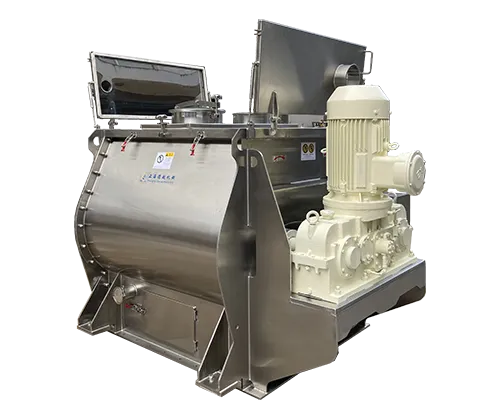
In the modern food processing landscape, operational efficiency is only half the battle. The other half—and often the more critical one—is strict adherence to hygiene and regulatory compliance. For plant managers, procurement specialists, and engineers, selecting the right stainless steel mixer food industry solutions requires a deep understanding of material science, sanitary design principles, and global safety standards. A failure in mixing equipment isn't just a production halt; it is a potential health hazard and a severe reputational risk.
This guide explores the technical necessities of FDA compliant mixing equipment, detailing how sanitary engineering prevents contamination, ensures product purity, and maximizes return on investment through longevity and ease of maintenance.
The Critical Role of Material Selection
The foundation of any hygienic mixing operation is the material itself. Not all stainless steel is created equal when it comes to food contact surfaces. High-quality food grade mixer units predominantly utilize Austenitic stainless steels, specifically grades 304 and 316L.
Grade 304 vs. Grade 316L
While Grade 304 offers excellent corrosion resistance for general-purpose applications involving low-acid foods, Grade 316L is the superior choice for aggressive environments. The addition of molybdenum in 316L provides enhanced resistance to chlorides and acids, making it the standard for dairy, meat processing, and high-salt or high-acid formulations. For a sanitary mixer operating in harsh cleaning cycles involving caustic agents, 316L minimizes pitting and crevice corrosion, ensuring the integrity of the surface finish over time.
Furthermore, the surface roughness (Ra value) of the interior tank and agitator blades is paramount. Regulatory bodies typically require an Ra value of less than 0.8 micrometers (32 microinches) for direct food contact surfaces. This ultra-smooth finish prevents bacterial adhesion and biofilm formation, allowing for effective Clean-in-Place (CIP) and Sterilize-in-Place (SIP) procedures.
Design Principles for Sanitary Mixing
Purchasing a stainless steel mixer food industry standard-compliant unit involves scrutinizing its geometric design. Traditional welds, dead legs, and hard-to-reach corners are breeding grounds for microbial growth. Modern FDA compliant mixing equipment eliminates these risks through several key design features:
- Orbital Welding: All internal welds must be orbital welded to create seamless, continuous joints that are polished flush with the surrounding metal. This eliminates crevices where debris can accumulate.
- Self-Draining Geometry: Tanks should be designed with dished bottoms or specific cone angles to ensure complete drainage during CIP cycles. Standing liquid promotes stagnation and bacterial growth.
- Sealed Bearings: External bearings must be isolated from the product zone. Lip seals or mechanical seals with double-barrier systems prevent lubricant leakage into the product and stop product ingress into the bearing housing.
- Tri-Clamp Fittings: All connections for sensors, valves, and inlet/outlet ports should utilize tri-clamp or similar sanitary fittings that allow for quick disassembly without tools, facilitating thorough manual inspection and cleaning.
Navigating Regulatory Compliance
For manufacturers exporting to or operating within the United States, compliance with the U.S. Food and Drug Administration (FDA) regulations is non-negotiable. Specifically, 21 CFR Part 117 outlines Current Good Manufacturing Practice (cGMP) for human food. While the FDA does not "approve" machinery, it mandates that equipment be constructed of materials safe for food contact and designed for easy cleaning.
Beyond the FDA, international operations must consider:
- EHEDG (European Hygienic Engineering & Design Group): Provides guidelines for designing equipment that facilitates hygienic processing.
- 3-A Sanitary Standards: Widely accepted in the dairy industry, these standards verify that equipment can be effectively cleaned and sanitized.
- USDA Approval: Essential for meat and poultry processing facilities, requiring even stricter hygiene protocols than general food processing.
Technical Comparison: Standard vs. Sanitary Mixers
To assist procurement specialists in evaluating vendors, the following table highlights the differences between standard industrial mixers and true sanitary food grade mixer solutions.
| Feature | Standard Industrial Mixer | Sanitary Food Grade Mixer |
|---|---|---|
| Material Grade | Carbon Steel or 304 SS (unpolished) | 316L SS, Electropolished Interior |
| Weld Quality | MIG/TIG, visible beads, potential crevices | Orbital Welded, ground and polished flush |
| Surface Roughness (Ra) | > 1.0 µm (often much higher) | < 0.8 µm (typically < 0.4 µm) |
| Cleaning Method | Manual, difficult access points | CIP/SIP compatible, self-draining design |
| Seals | Standard mechanical seals, potential leakage | Double mechanical seals, FDA-approved elastomers |
Operational Efficiency and Maintenance
A well-engineered sanitary mixer reduces total cost of ownership (TCO). While the initial capital expenditure may be higher than non-sanitary alternatives, the reduction in downtime for cleaning, lower water and chemical usage during CIP cycles, and extended equipment lifespan justify the investment. Furthermore, reliable mixing ensures consistent product quality, reducing waste from batch failures due to poor homogenization.
Engineers should also prioritize energy-efficient motor designs and variable frequency drives (VFDs) that allow for precise speed control. This ensures optimal shear rates for different viscosities, from thin liquids to high-viscosity doughs, without compromising the sanitary integrity of the process.
Conclusion
Selecting the right stainless steel mixer food industry partner is a strategic decision that impacts safety, compliance, and profitability. By prioritizing high-grade materials, sanitary design principles, and rigorous adherence to FDA and 3-A standards, manufacturers can ensure their production lines meet the highest hygiene benchmarks. Whether you are processing dairy, beverages, or ready-to-eat meals, investing in robust, compliant mixing equipment is essential for long-term success.
For expert consultation on selecting the perfect FDA compliant mixing equipment tailored to your specific production needs, contact our engineering team today.
Contact Us:
Phone: +86 13917895463
Email: [email protected]
Website: https://www.deyuemixer.com/
label:
related news