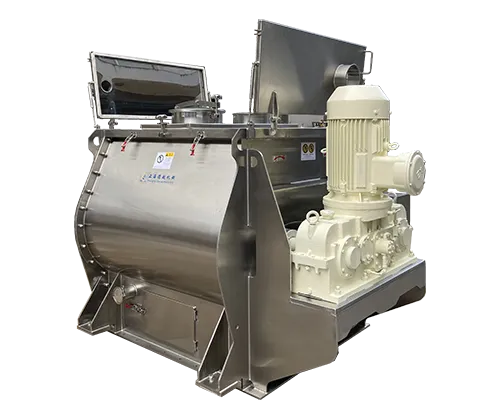
Mixing Equipment Safety Guidelines for Chemical Plants


release time:

2026-07-06

Essential mixing equipment safety guidelines for chemical processing plants. Ensure industrial mixer safety and compliance with processing equipment guidelines.

Comprehensive Mixing Equipment Safety Guidelines for Chemical Processing Plants

In the high-stakes environment of chemical processing, the integrity of mixing operations is paramount. Mixing equipment safety is not merely a regulatory checkbox; it is the cornerstone of operational continuity, personnel protection, and product quality. For plant managers and engineering teams, understanding the specific hazards associated with industrial mixer safety requires a deep dive into mechanical, electrical, and chemical risk factors. This guide outlines critical protocols to ensure robust chemical plant safety while maintaining efficient production cycles.

The Critical Role of Process Engineering in Hazard Mitigation

Before addressing operational procedures, it is essential to recognize that many safety incidents originate during the design and selection phase of processing equipment guidelines. Chemical reactions can be exothermic, creating thermal runaways if agitation is insufficient. Conversely, improper mixing can lead to stratification, causing unpredictable reactions when batches are combined. Engineers must select agitators that match the fluid dynamics of the specific chemical mixture, ensuring adequate power input without generating excessive shear or heat that could compromise vessel integrity.

A fundamental aspect of mixing equipment safety is the verification of material compatibility. The impeller, shaft, seals, and tank linings must resist corrosion from the processed chemicals. A failure in seal integrity does not just cause leaks; it introduces external contaminants into the process or allows hazardous vapors to escape, directly impacting overall chemical plant safety.

Operational Protocols for Industrial Mixer Safety

Standard Operating Procedures (SOPs) must be rigorously enforced to maintain industrial mixer safety. These protocols should cover pre-start checks, runtime monitoring, and shutdown sequences. Below are key operational areas requiring strict adherence:

Lockout/Tagout (LOTO) Compliance

The most significant hazard in mixing operations is unexpected startup during maintenance. Strict processing equipment guidelines mandate comprehensive Lockout/Tagout procedures. Before any inspection, cleaning, or repair of the agitator system, all energy sources—electrical, pneumatic, and hydraulic—must be isolated and verified as de-energized. This protocol is non-negotiable for preventing catastrophic injuries related to rotating machinery.

Vibration and Noise Monitoring

Excessive vibration is often the precursor to mechanical failure. In chemical plant safety management, regular vibration analysis helps detect misalignment, imbalance, or bearing wear before they lead to shaft failure. Similarly, abnormal noise levels can indicate cavitation in liquid mixing or solid-to-solid impact in dry blending. Implementing a predictive maintenance schedule based on these metrics ensures long-term reliability and reduces the risk of sudden equipment breakdowns.

Seal and Gasket Integrity Checks

Dual mechanical seals are standard in modern industrial mixer safety designs for hazardous applications. Regular inspection of seal faces, flush plans, and barrier fluids is essential. Leaks from sealing systems can release toxic or flammable substances into the workspace. Operators must be trained to recognize early signs of seal degradation, such as changes in pressure readings or visible moisture around the shaft entry point.

Comparative Analysis: Safety Features in Modern Agitators

To enhance mixing equipment safety, many facilities are upgrading from older mechanical setups to advanced systems with integrated safety features. The following table compares traditional approaches with modern best practices:

Safety AspectTraditional ApproachModern Best Practice
Emergency StopManual pull-cord switches onlyAutomated PLC-triggered stops with redundant manual overrides
Shaft SupportTop-mounted bearings onlyBottom-bearing support systems to prevent whip and deflection
Seal ProtectionSingle mechanical sealDual pressurized mechanical seals with leak detection sensors
Over-Torque ProtectionFuse couplings (one-time use)Variable Frequency Drives (VFDs) with programmable torque limits
Access ControlPhysical guards with manual interlocksInterlocked hatches that cut power immediately upon opening

Training and Culture in Processing Equipment Guidelines

Technical safeguards are ineffective without a competent workforce. Processing equipment guidelines must include comprehensive training programs that cover both theoretical knowledge and practical application. Operators should understand not just how to start the mixer, but why specific parameters exist. For instance, understanding the relationship between fluid viscosity and motor load helps prevent overloading during startup.

Furthermore, fostering a culture of chemical plant safety encourages employees to report near-misses and potential hazards without fear of reprisal. Regular safety audits and toolbox talks keep mixing equipment safety at the forefront of daily operations. When every team member is engaged in hazard identification, the likelihood of accidents decreases significantly.

Conclusion

Implementing robust mixing equipment safety protocols is an ongoing commitment that protects both human capital and industrial assets. By integrating advanced engineering solutions, adhering to strict LOTO procedures, and prioritizing operator training, chemical processing plants can achieve superior industrial mixer safety. These measures not only comply with regulatory standards but also enhance operational efficiency and reduce downtime.

For specialized advice on selecting the right agitator systems or upgrading existing infrastructure to meet the highest processing equipment guidelines, contact our engineering team today. We are dedicated to helping you optimize your chemical plant safety while maximizing production output.

Contact Us:
Phone: +86 13917895463
Email: [email protected]
Website: https://www.deyuemixer.com/

label:


If you want to know more about the details of a certain company, please visit our official website where there is comprehensive and in-depth information for you to check!


Copyright © 2012-2026 Shanghai Deyue Powder Machinery Co., Ltd. All rights reserved

Leave your message

If you have any suggestions or questions for us, please feel free to contact us!

DJH Double-Shaft Paddle Mixer
We use cookie to improve your online experience. By continuing to browse this website, you agree to our use of cookie.

Cookies

Please read our Terms and Conditions and this Policy before accessing or using our Services. If you cannot agree with this Policy or the Terms and Conditions, please do not access or use our Services. If you are located in a jurisdiction outside the European Economic Area, by using our Services, you accept the Terms and Conditions and accept our privacy practices described in this Policy.
We may modify this Policy at any time, without prior notice, and changes may apply to any Personal Information we already hold about you, as well as any new Personal Information collected after the Policy is modified. If we make changes, we will notify you by revising the date at the top of this Policy. We will provide you with advanced notice if we make any material changes to how we collect, use or disclose your Personal Information that impact your rights under this Policy. If you are located in a jurisdiction other than the European Economic Area, the United Kingdom or Switzerland (collectively “European Countries”), your continued access or use of our Services after receiving the notice of changes, constitutes your acknowledgement that you accept the updated Policy. In addition, we may provide you with real time disclosures or additional information about the Personal Information handling practices of specific parts of our Services. Such notices may supplement this Policy or provide you with additional choices about how we process your Personal Information.


Cookies

Cookies are small text files stored on your device when you access most Websites on the internet or open certain emails. Among other things, Cookies allow a Website to recognize your device and remember if you've been to the Website before. Examples of information collected by Cookies include your browser type and the address of the Website from which you arrived at our Website as well as IP address and clickstream behavior (that is the pages you view and the links you click).We use the term cookie to refer to Cookies and technologies that perform a similar function to Cookies (e.g., tags, pixels, web beacons, etc.). Cookies can be read by the originating Website on each subsequent visit and by any other Website that recognizes the cookie. The Website uses Cookies in order to make the Website easier to use, to support a better user experience, including the provision of information and functionality to you, as well as to provide us with information about how the Website is used so that we can make sure it is as up to date, relevant, and error free as we can. Cookies on the Website We use Cookies to personalize your experience when you visit the Site, uniquely identify your computer for security purposes, and enable us and our third-party service providers to serve ads on our behalf across the internet.

We classify Cookies in the following categories:
 ●  Strictly Necessary Cookies
 ●  Performance Cookies
 ●  Functional Cookies
 ●  Targeting Cookies


Cookie List
A cookie is a small piece of data (text file) that a website – when visited by a user – asks your browser to store on your device in order to remember information about you, such as your language preference or login information. Those cookies are set by us and called first-party cookies. We also use third-party cookies – which are cookies from a domain different than the domain of the website you are visiting – for our advertising and marketing efforts. More specifically, we use cookies and other tracking technologies for the following purposes:

Strictly Necessary Cookies
These cookies are necessary for the website to function and cannot be switched off in our systems. They are usually only set in response to actions made by you which amount to a request for services, such as setting your privacy preferences, logging in or filling in forms. You can set your browser to block or alert you about these cookies, but some parts of the site will not then work. These cookies do not store any personally identifiable information.

Functional Cookies
These cookies enable the website to provide enhanced functionality and personalisation. They may be set by us or by third party providers whose services we have added to our pages. If you do not allow these cookies then some or all of these services may not function properly.

Performance Cookies
These cookies allow us to count visits and traffic sources so we can measure and improve the performance of our site. They help us to know which pages are the most and least popular and see how visitors move around the site. All information these cookies collect is aggregated and therefore anonymous. If you do not allow these cookies we will not know when you have visited our site, and will not be able to monitor its performance.

Targeting Cookies
These cookies may be set through our site by our advertising partners. They may be used by those companies to build a profile of your interests and show you relevant adverts on other sites. They do not store directly personal information, but are based on uniquely identifying your browser and internet device. If you do not allow these cookies, you will experience less targeted advertising.

How To Turn Off Cookies
You can choose to restrict or block Cookies through your browser settings at any time. Please note that certain Cookies may be set as soon as you visit the Website, but you can remove them using your browser settings. However, please be aware that restricting or blocking Cookies set on the Website may impact the functionality or performance of the Website or prevent you from using certain services provided through the Website. It will also affect our ability to update the Website to cater for user preferences and improve performance. Cookies within Mobile Applications

We only use Strictly Necessary Cookies on our mobile applications. These Cookies are critical to the functionality of our applications, so if you block or delete these Cookies you may not be able to use the application. These Cookies are not shared with any other application on your mobile device. We never use the Cookies from the mobile application to store personal information about you.

If you have questions or concerns regarding any information in this Privacy Policy, please contact us by email at . You can also contact us via our customer service at our Site.