English
 Español
 Русский
 لالعربية

Mixing Time Optimization: Reduce Cycle Times Safely
release time:
2026-07-06
Learn how to achieve mixing time optimization without sacrificing quality. Strategies for plant managers to reduce mixing cycle time efficiently.
Mixing Time Optimization: Reducing Cycle Times Without Sacrificing Quality
In the competitive landscape of industrial manufacturing, time is money. For plant managers and process engineers, the pressure to increase throughput is constant. However, the most common mistake in the pursuit of speed is blindly reducing the mixing cycle time without considering the rheological properties of the material. True efficiency isn't just about how fast you mix; it's about achieving homogeneity in the shortest possible time while maintaining product integrity.
This guide explores practical strategies for mixing time optimization, ensuring that your operations remain both efficient mixing drivers and quality guardians. By understanding the physics of agitation and leveraging advanced equipment design, you can significantly reduce downtime and energy consumption.
The Balance Between Speed and Homogeneity
The core challenge in optimize mixing processes is balancing shear force with residence time. Many operators assume that increasing the impeller speed will always reduce mixing time. While this is true for low-viscosity fluids, it often leads to detrimental effects in high-viscosity applications, such as:
- Material Degradation: Excessive shear can break down polymer chains or damage sensitive ingredients.
- Heat Generation: Friction from rapid agitation raises temperatures, potentially requiring costly cooling cycles.
- Aeration: High-speed mixing introduces air bubbles, leading to voids and inconsistent density in the final product.
To achieve genuine mixing time optimization, engineers must focus on flow pattern efficiency rather than raw rotational speed. The goal is to create a volumetric flow that ensures every particle in the tank participates in the mixing process uniformly.
Key Strategies for Efficient Mixing
Implementing efficient mixing protocols requires a systematic approach to equipment configuration and process parameters. Below are three critical areas where adjustments yield the highest return on investment.
1. Impeller Geometry Selection
The type of impeller dictates the flow regime. A standard turbine may provide excellent dispersion but poor bulk circulation. Conversely, an anchor or helical ribbon impeller moves large volumes of viscous material but may not provide sufficient shear for dispersion. To optimize the mixing cycle time, select an impeller that matches the primary objective:
- Low Viscosity: Use hydrofoil or pitched-blade turbines for top-to-bottom circulation.
- High Viscosity: Utilize helical ribbon or anchor agitators to scrape walls and move bulk material.
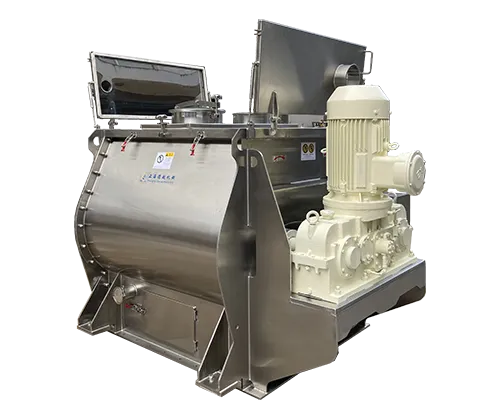
- Multi-Phase: Consider dual-shaft mixers that combine high-shear dispersion with low-shear bulk movement.
2. Baffle Design and Tank Geometry
Turbulent mixing is often desired for homogeneity, but without proper baffles, the fluid simply rotates around the shaft (vortexing), creating dead zones. Installing baffles disrupts this rotational flow, converting tangential velocity into axial and radial flow. This disruption is essential for mixing time optimization because it eliminates stagnant pockets where unmixed material can linger, effectively reducing the required residence time.
3. Variable Frequency Drives (VFDs)
Modern efficient mixing relies on precise control. VFDs allow operators to ramp up speed gradually to prevent splashing or material clumping, then adjust based on real-time torque feedback. By monitoring torque, you can detect when the mixture has reached a specific viscosity threshold, indicating that the mixing cycle time can be safely reduced for subsequent batches.
Comparative Analysis: Traditional vs. Optimized Mixing
To understand the impact of mixing time optimization, consider the difference between a traditional setup and an engineered solution. The table below illustrates potential gains in production metrics.
| Metric | Traditional Mixing | Optimized Mixing Strategy |
|---|---|---|
| Avg. Cycle Time | 45 minutes | 30 minutes |
| Energy Consumption | High (Continuous high RPM) | Low (Pulsed/VFD controlled) |
| Homogeneity Variance | ±5% | ±1% |
| Product Waste | Higher (Over-mixing/Heat damage) | Negligible |
| Throughput Increase | Baseline | +33% per shift |
Implementing Continuous Improvement
Optimize mixing is not a one-time event but a continuous process. Plant managers should adopt a culture of data-driven decision-making. Implement sensors to monitor temperature, torque, and viscosity in real-time. Use this data to refine recipes and adjust agitation parameters dynamically.
Furthermore, regular maintenance of seals and bearings is crucial. A slight misalignment in the agitator shaft can create uneven flow patterns, drastically increasing the mixing cycle time needed to achieve uniformity. Preventive maintenance ensures that your equipment operates at peak efficiency, supporting long-term mixing time optimization.
Conclusion
Achieving superior results in industrial processing requires more than just running machines faster. It demands a deep understanding of fluid dynamics, material science, and mechanical engineering. By focusing on impeller geometry, flow patterns, and precise control mechanisms, you can significantly reduce cycle times without compromising product quality.
Whether you are dealing with adhesives, pharmaceuticals, food products, or chemical compounds, efficient mixing is the cornerstone of operational excellence. Don't let outdated practices hold back your production capacity. Partner with experts who understand the nuances of mixing time optimization to transform your manufacturing process.
Ready to upgrade your mixing efficiency?
Contact DEYUE MACHINERY today for expert consultation and high-performance mixer solutions tailored to your specific needs.
Phone: +86 13917895463
Email: [email protected]
Website:https://www.deyuemixer.com/
label:
related news