English
 Español
 Русский
 لالعربية

Lithium Battery Powder Mixer | Battery Electrode Mixing Equipment
release time:
2026-06-28
Professional lithium battery powder mixer for cathode and anode material blending. Vacuum, anti-static ribbon blenders for NMC, LFP battery production.
Lithium Battery Powder Mixer: Complete Guide to Battery Electrode Mixing Equipment
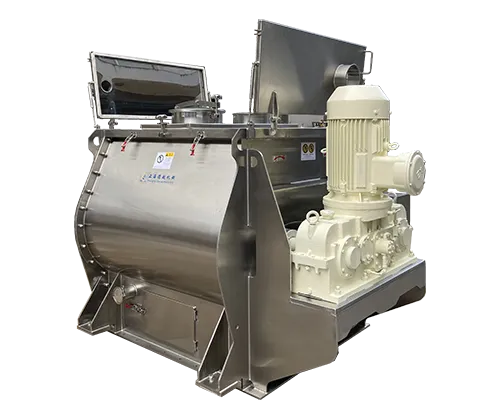
The global lithium-ion battery market is expanding rapidly, driven by electric vehicles, energy storage systems, and consumer electronics. At the heart of every battery cell lies a precisely formulated electrode coating slurry — and the quality of that slurry begins with one critical step: lithium battery powder mixing. Choosing the right battery material blending equipment directly impacts battery performance, safety, and manufacturing efficiency.
Shanghai Deyue Machinery specializes in ribbon blender technology designed specifically for the demanding requirements of lithium battery material processing. From cathode material mixer applications to anode material mixer setups, our equipment delivers uniform mixing while preventing contamination, static discharge, and particle degradation — three of the most common challenges in lithium ion battery powder mixing.
Why Lithium Battery Mixing Is Different from General Industrial Mixing
Battery material mixing is not just another powder blending operation. The active materials used in lithium-ion batteries — such as lithium cobalt oxide (LCO), nickel manganese cobalt oxide (NMC), lithium iron phosphate (LFP), graphite, and silicon composites — have unique physical and chemical properties that demand specialized battery electrode mixing equipment.
Key Challenges in Battery Material Mixing
- Electrostatic sensitivity: Fine battery powders generate significant static charge during mixing. Without proper grounding and anti-static design, this can lead to dust explosions or uneven distribution of conductive additives.
- Contamination risk: Metal particles from mixer wear surfaces can migrate into the active material, causing internal shorts and reduced battery lifespan. Even trace amounts of iron or copper contamination are unacceptable in NMC powder mixer or LFP mixer applications.
- Particle size preservation: Over-mixing or excessive shear forces can fracture active material particles, altering surface area and electrochemical performance. Precise control of mixing intensity is essential.
- Volatile solvent handling: Many electrode formulations use NMP (N-methyl-2-pyrrolidone) or water-based binders that require controlled atmosphere environments to prevent evaporation and maintain consistency.
Cathode vs Anode Material Mixing Requirements
Understanding the differences between cathode and anode mixing processes is crucial for selecting the right battery material blending equipment. Below is a comparison of the key parameters for each application:
| Parameter | Cathode Material Mixing | Anode Material Mixing |
|---|---|---|
| Common Active Materials | LFP, NMC, NCA, LCO | Graphite, Silicon-Graphite Composite, Hard Carbon |
| Typical Particle Size (D50) | 1 – 5 μm | 8 – 15 μm |
| Binder Type | PVDF in NMP (organic) | SBR / CMC in Water (aqueous) |
| Mixing Temperature | 20 – 40°C | 20 – 30°C |
| Vacuum Requirement | High (degassing critical) | Medium (bubble removal) |
| Contamination Tolerance | Extremely Low (< 1 ppm Fe) | Very Low (< 5 ppm Fe) |
| Static Risk Level | Very High | High |
| Recommended Mixer Type | Vacuum Ribbon Blender with Anti-Static Coating | Vacuum Ribbon Blender with Aqueous-Compatible Design |
As shown in the table above, cathode material mixer applications generally require tighter contamination controls and higher vacuum degassing capability compared to anode mixing. Our ribbon blenders can be configured with different coatings and sealing arrangements to suit either cathode or anode material mixer specifications.
The Role of Vacuum Mixing in Battery Material Processing
Vacuum mixing is one of the most important features in modern lithium battery powder mixer systems. During the electrode slurry preparation process, air entrapment is a major concern. Trapped air bubbles in the slurry cause coating defects, reduce active material density, and ultimately degrade battery capacity and cycle life.
Deyue's vacuum ribbon blenders operate at pressures as low as -0.09 MPa, effectively removing entrapped air from the powder blend before binder addition and during the mixing process. This vacuum degassing step is particularly critical for NMC powder mixer applications, where the high surface area of nickel-rich cathode materials makes them especially prone to air entrapment.
Vacuum Mixing Benefits for Battery Production
- Eliminates air bubbles in electrode slurry, improving coating uniformity
- Prevents oxidative degradation of sensitive active materials like lithium-rich NMC
- Reduces moisture content in hygroscopic materials such as LFP and lithium phosphate precursors
- Improves binder dispersion by allowing liquid additive to penetrate powder agglomerates more effectively
- Enhances reproducibility between batches — a key requirement for battery electrode mixing quality control
Anti-Static Design: A Non-Negotiable Feature for Battery Mixers
Static electricity poses a serious hazard in lithium ion battery powder mixing operations. Battery-grade powders are extremely fine — often below 10 microns — and generate substantial triboelectric charges when particles rub against each other and mixer surfaces during agitation.
If not properly managed, static discharge can:
- Ignite combustible dust clouds, creating explosion risks
- Cause powder to cling to mixer walls and agitator shafts, resulting in incomplete mixing and batch-to-batch variability
- Attract foreign particulates from the environment, introducing contamination
- Degrade performance of conductive additives like carbon black and CNTs (carbon nanotubes)
Deyue addresses these concerns through a comprehensive anti-static design approach. All contact surfaces are constructed from anti-corrosion stainless steel grades (typically 316L or 304) with polished finishes to minimize particle adhesion. The mixer frame includes dedicated grounding points, and optional anti-static lining materials can be specified for highly sensitive LFP mixer and cathode material mixer installations.
Contamination Prevention in Battery Material Blending
Contamination prevention is arguably the most critical design consideration for any battery material blending equipment. Even microscopic metal particles introduced during mixing can compromise battery safety and performance.
Deyue's Contamination-Control Features
- Precision-machined clearance: The gap between the ribbon agitator and mixer wall is maintained within 1–3 mm, minimizing material accumulation zones where contamination can occur.
- Sealed bearing design: All bearings are located outside the mixing chamber with double mechanical seals and nitrogen purging, preventing lubricant migration into the powder blend.
- Smooth interior surfaces: Interior welds are ground flush and polished to Ra ≤ 0.4 μm, eliminating crevices where residual material can accumulate and cross-contaminate subsequent batches.
- Modular component design: Ribbon agitators and discharge valves can be quickly disassembled for cleaning, supporting multi-product facilities that switch between different lithium battery powder mixer formulations.
Why Deyue Ribbon Mixers Excel in Battery Material Processing
Shanghai Deyue Machinery brings decades of expertise in powder blending technology to the lithium battery sector. Our ribbon blenders offer several advantages specifically tailored to battery electrode mixing applications:
Scalability from Lab to Production
Deyue offers ribbon blenders ranging from 50-liter laboratory models to 5,000-liter production units, enabling battery manufacturers to develop consistent processes from R&D through commercial scale-up. This scalability is essential for companies establishing new lithium ion battery powder mixing lines in China, Southeast Asia, Europe, or North America.
Customization for Specific Chemistry
Whether you produce LFP mixer formulations for cost-sensitive energy storage batteries, or require a precision NMC powder mixer for high-energy-density EV applications, Deyue engineers can customize mixer configurations including:
- Vacuum degassing systems with adjustable pressure control
- Anti-static grounding and bonding accessories
- Heated or jacketed mixing chambers for temperature-sensitive binders
- Multiple liquid injection ports for sequential additive dosing
- Explosion-proof motor and electrical components for hazardous area compliance
Global Supply Chain Support
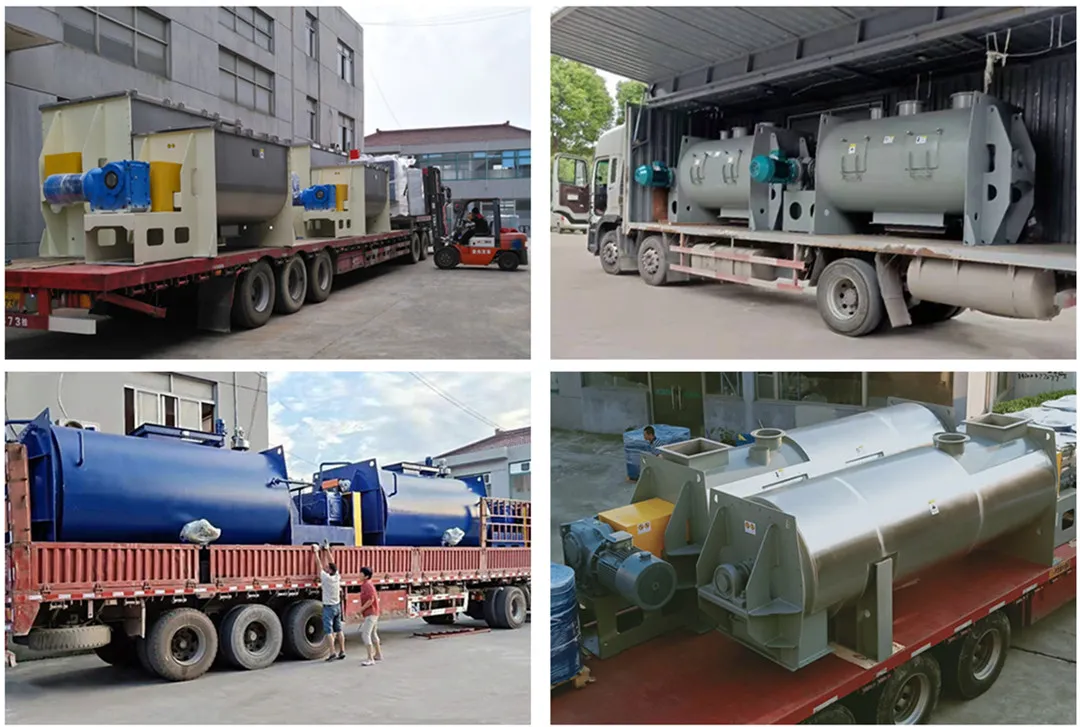
As the battery supply chain continues to expand globally, Deyue provides export-ready mixing solutions with CE certification for European markets, UL listing options for North America, and ATEX-compliant configurations for regions with strict explosive atmosphere regulations. Our equipment has been installed in battery material production facilities across China, Japan, South Korea, Thailand, Hungary, and the United States.
For large-scale ribbon mixer solutions specifically designed for heavy-duty industrial mixing, explore our DLH Large Scale Ribbon Mixer series, which can be configured with vacuum and anti-static options for battery material processing.
Selecting the Right Battery Powder Mixer: Key Specifications to Consider
When evaluating battery material blending equipment, battery manufacturers should consider the following specifications:
| Specification | Recommended Range | Why It Matters |
|---|---|---|
| Mixer Volume Capacity | 100L – 3,000L | Matches production throughput requirements |
| Ribbon Speed (RPM) | 20 – 45 RPM | Controls shear force and mixing intensity |
| Vacuum Level | -0.09 MPa to -0.095 MPa | Ensures effective degassing of electrode slurry |
| Interior Surface Finish | Ra ≤ 0.4 μm | Prevents material buildup and cross-contamination |
| Seal Type | Double Mechanical Seal + Nitrogen Purge | Protects bearings from powder ingress |
| Motor Protection | IP54 minimum, Ex d IIB T4 for hazardous areas | Ensures safe operation with combustible dust |
| Discharge Valve | Butterfly valve or ball valve with quick-release | Enables fast, complete discharge without dead zones |
Frequently Asked Questions
What is the best mixer type for lithium battery cathode materials?
A vacuum ribbon blender with anti-static grounding and polished 316L stainless steel internals is the preferred choice for cathode material mixer applications. The vacuum function removes entrapped air from the slurry, while the ribbon agitator provides gentle yet thorough mixing that preserves particle integrity of sensitive materials like NMC and LFP.
Can ribbon mixers handle both cathode and anode powder blending?
Yes. A single Deyue ribbon blender can be configured for either cathode material mixer or anode material mixer duty. For facilities producing both cathode and anode slurries, we recommend dedicated mixers for each line to prevent cross-contamination, or alternatively, use modular ribbon agitators that can be swapped between cathode and anode production runs.
How does vacuum mixing improve battery electrode quality?
Vacuum mixing removes air bubbles from the electrode slurry, which directly improves coating uniformity on the current collector foil. This results in higher active material loading consistency, fewer pinholes in the dried coating, and ultimately better battery capacity and cycle life. Vacuum mixing is considered essential for lithium ion battery powder mixing operations producing high-performance cells.
What anti-static measures are necessary for battery powder mixing?
Essential anti-static measures include grounded mixer frames, conductive or anti-static lining on internal surfaces, bonded and grounded flexible connections between mixer and downstream equipment, and optionally, nitrogen inerting of the mixing chamber. These measures prevent static discharge that could ignite combustible battery powder dust and ensure uniform dispersion of conductive additives.
What is the typical mixing time for battery electrode materials?
Typical mixing cycles for battery electrode mixing range from 30 to 90 minutes, depending on the formulation complexity, mixer capacity, and whether liquid binders are added during the process. Shorter mixing times are preferred for simple dry-blending of conductive carbon with active materials, while longer cycles may be needed for complete dispersion of PVDF binder in cathode slurry preparation.
Does Deyue provide battery material mixer solutions for international markets?
Absolutely. Deyue manufactures and exports battery material blending equipment worldwide, with installations in China, Japan, South Korea, Thailand, Vietnam, Hungary, Germany, the United States, and Australia. All units can be configured to meet regional safety standards including CE, UL, ATEX, and IECEx certifications.
Conclusion
Selecting the right lithium battery powder mixer is a foundational decision for any battery material production facility. The unique requirements of cathode and anode materials — including extreme sensitivity to contamination, static electricity hazards, and the need for precise vacuum degassing — demand purpose-built mixing equipment rather than generic industrial blenders.
Shanghai Deyue Machinery offers proven ribbon blender technology specifically adapted for lithium ion battery powder mixing applications. From LFP mixer configurations for cost-effective energy storage production to precision NMC powder mixer systems for high-performance electric vehicle batteries, our equipment combines reliable mixing performance with the anti-static, vacuum, and contamination-control features that modern battery manufacturing demands.
Whether you are scaling up from lab experiments to pilot production or establishing a new battery material blending line, Deyue's team of engineers can design a customized battery electrode mixing solution that meets your specific chemistry, capacity, and regulatory requirements.
For detailed specifications and a consultation on your battery material blending equipment needs, visit our Contact Page or reach out directly to discuss your project requirements.
Contact Us:
Phone: +86 13917895463
Email: [email protected]
Website: https://www.deyuemixer.com/
label:
related news