English
 Español
 Русский
 لالعربية

Ribbon Mixer Price Guide 2026: How Much Does a Ribbon Blender Cost?
release time:
2026-06-26
Comprehensive ribbon mixer price guide 2026. Compare costs by capacity, material grade & features. Get the best ribbon mixer for sale from China.
Ribbon Mixer Price Guide 2026: How Much Does a Ribbon Blender Cost?

Finding the right ribbon mixer price is critical for any business relying on powder blending, dry mix production, or solid-liquid compounding. Understanding what drives ribbon blender costs helps you negotiate better deals and avoid hidden expenses.
This guide breaks down every factor affecting ribbon mixer pricing in 2026, provides real price ranges for common configurations, and shows you how to compare quotes from Chinese manufacturers like Shanghai Deyue Machinery.
What Is a Ribbon Mixer and Why Does Pricing Matter?
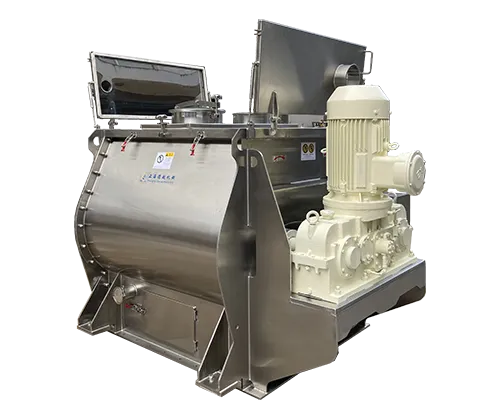
A ribbon mixer (also called a ribbon blender) is a horizontal mixing machine that uses two concentric ribbon agitators — an outer ribbon that pushes material inward and an inner ribbon that pushes material outward — to achieve uniform blending of powders, granules, and pastes. These mixers are widely used in chemical, food, pharmaceutical, feed, construction materials, and battery electrode industries.
The ribbon mixer price varies significantly because these machines are not off-the-shelf products. Each unit is typically engineered to match your specific material properties, production capacity requirements, and regulatory standards. Understanding this variability is the first step toward making an informed purchasing decision.
Key Factors That Affect Ribbon Mixer Price
1. Mixing Capacity and Tank Volume
Capacity is the single biggest driver of ribbon mixer cost. Mixers range from small laboratory models with 50-liter volumes to large industrial units exceeding 10,000 liters per batch. Larger tanks require more steel, heavier-duty motors, larger bearings, and more robust frame structures — all of which increase the price proportionally.
| Model Size | Tank Volume (L) | Daily Output (tons) | Estimated Price Range (USD) |
|---|---|---|---|
| Small | 50 – 500 | 1 – 5 | $3,500 – $12,000 |
| Medium | 500 – 2,000 | 5 – 20 | $12,000 – $35,000 |
| Large | 2,000 – 5,000 | 20 – 50 | $35,000 – $75,000 |
| Extra Large | 5,000 – 10,000+ | 50 – 100+ | $75,000 – $150,000+ |
For high-capacity applications, consider our DLH Large-Scale Ribbon Mixer, designed for continuous production lines with outputs exceeding 50 tons per day.
2. Material Grade and Construction Quality
The material used for the mixing tank, ribbons, and shaft directly impacts both durability and price. Common options include:
- Carbon Steel (Q235): The most economical option, suitable for non-corrosive dry materials. Adds approximately 15–20% to the base price compared to painted finishes.
- Stainless Steel 304: Standard for food-grade, pharmaceutical, and cosmetic applications. Costs roughly 40–60% more than carbon steel but ensures hygiene compliance and corrosion resistance.
- Stainless Steel 316L: Used for highly corrosive chemicals and strict sanitary environments. Adds another 25–35% over 304 stainless steel pricing.
- Lined or Coated Tanks: Epoxy, polyurethane, or ceramic linings for specialized chemical applications. Prices vary widely depending on lining thickness and material.
3. Motor Power and Drive System
Motor specifications scale with tank size and material density. A 500-liter mixer might use a 7.5 kW motor, while a 5,000-liter unit could require 55 kW or more. Premium brands like Siemens or ABB motors add 10–15% to the cost but offer superior efficiency, lower energy consumption, and longer service life.
The drive system also matters. Direct drive systems are simpler and cheaper but may lack torque control. Gear reducer systems with frequency converters (VFD) provide precise speed regulation and are preferred for sensitive materials — though they increase the ribbon mixer cost by 8–12%.
4. Customization and Special Features
Standard ribbon mixers come with basic configurations. However, many buyers need custom features that affect the final ribbon mixer manufacturer price:
- Spray nozzles or liquid injection ports: For wet granulation or binder addition (+$800–$2,500)
- Jacketed heating/cooling coils: Temperature-controlled mixing for thermally sensitive materials (+$2,000–$8,000)
- Dust-proof covers and vacuum systems: For explosive or toxic powders (+$1,500–$5,000)
- CIP (Clean-in-Place) systems: Automated cleaning for food and pharma applications (+$3,000–$10,000)
- Explosion-proof motors and electrical components: Required for flammable dust environments (+$2,000–$6,000)
- PLC control panels with touchscreen HMI: Automated recipe management and data logging (+$1,500–$4,000)
5. Accessories and After-Sales Support
Additional accessories such as sample valves, pressure gauges, level sensors, and discharge valves add to the overall investment. Equally important is the after-sales package — warranty terms, spare parts availability, installation guidance, and remote troubleshooting capability. Some ribbon mixer suppliers in China include a one-year warranty and free spare parts kit, while others charge separately for each component.
Ribbon Mixer Price List 2026: Real Market Ranges
The table below reflects actual market pricing from leading Chinese ribbon mixer manufacturers for standard configurations (carbon steel, basic drive, no special accessories). Prices are FOB China and exclude shipping, import duties, and VAT.
| Configuration | Volume | Motor (kW) | Price Range (USD) |
|---|---|---|---|
| Basic Carbon Steel | 200 L | 5.5 | $3,500 – $5,500 |
| Basic Carbon Steel | 500 L | 7.5–11 | $5,500 – $8,500 |
| Basic Carbon Steel | 1,000 L | 11–15 | $8,500 – $14,000 |
| SS304 Food Grade | 500 L | 7.5–11 | $9,000 – $13,500 |
| SS304 Food Grade | 1,000 L | 11–15 | $14,000 – $22,000 |
| SS316L Pharma Grade | 500 L | 7.5–11 | $13,000 – $18,000 |
| SS316L Pharma Grade | 1,000 L | 11–15 | $20,000 – $30,000 |
| Large Scale DLH Series | 3,000–5,000 L | 30–55 | $45,000 – $75,000 |
Compared to European ribbon mixer brands, Chinese manufacturers typically offer prices that are 30–50% lower for equivalent specifications. A comparable 1,000-liter SS304 ribbon mixer from a German or Italian manufacturer often exceeds $60,000, while Chinese suppliers offer the same quality at $14,000–$22,000.
How to Compare Quotes from Chinese Ribbon Mixer Suppliers
When shopping for a ribbon mixer for sale, receiving multiple quotes is essential. However, not all quotes are created equal. Here is a practical checklist for comparing offers from different ribbon mixer supplier China vendors:
Check Specification Parity
Ensure each quote uses the same base specifications — tank volume, material grade, motor brand, gearbox ratio, and ribbon design. A quote that appears significantly cheaper may use thinner steel plates, lower-grade bearings, or unbranded motors that will fail within months of operation.
Verify Certifications and Compliance
Reputable Chinese manufacturers hold CE certification, ISO 9001 quality management certification, and sometimes ATEX explosion-proof certification. Ask for copies of these documents before making a purchase decision. For exports to Russia, verify GOST certification requirements; for Spain and EU markets, CE marking is mandatory.
Clarify What Is Included in the Price
A transparent ribbon mixer price list should specify whether the quoted amount includes: factory acceptance testing, disassembly and crating, export documentation, installation drawings, remote commissioning support, and spare parts. Some low-cost quotes exclude these items, resulting in unexpected charges later.
Evaluate the Manufacturer's Track Record
Shanghai Deyue Machinery has been manufacturing ribbon mixers for over a decade and ships regularly to customers in Russia, Spain, and Arab countries including Saudi Arabia, the UAE, and Qatar. Ask potential suppliers for references and case studies from your region. A manufacturer with proven export experience reduces the risk of communication gaps, compliance issues, and delivery delays.
Tips for Getting the Best Ribbon Mixer Cost in 2026
Getting the lowest ribbon mixer cost does not mean choosing the cheapest quote. Here are proven strategies to maximize value:
- Order in bulk or plan for future expansion. Many Chinese manufacturers offer volume discounts of 5–15% for orders of two or more units. If you anticipate scaling production, order additional capacity now rather than paying premium prices later.
- Choose standard configurations where possible. Custom ribbon mixers carry premium engineering fees. If your material properties allow, opt for a standard model and modify only the necessary parameters.
- Request a complete package deal. Some ribbon mixer manufacturer price quotes separate the equipment cost from installation, training, and spare parts. Negotiating a bundled package often yields better overall savings.
- Consider total cost of ownership. A slightly higher initial investment in a higher-efficiency motor or premium gearbox can reduce energy costs by 10–20% annually and extend maintenance intervals. Over a five-year operational period, this often pays for the price difference.
- Visit the factory or request a live video tour. Seeing the manufacturing process, quality inspection procedures, and assembly standards gives you confidence that the price you pay reflects genuine build quality.
Shipping and Regional Pricing Considerations
For international buyers, the FOB China price is only part of the total landed cost. Shipping to Russia adds $2,000–$8,000, shipments to Spain and Western Europe cost $3,000–$10,000, and shipping to Arab countries via Jebel Ali or Jeddah ranges from $2,500–$9,000 per container.
Chinese manufacturers generally offer more favorable shipping terms than European suppliers because they have established logistics partnerships with major freight forwarders serving these specific regions. Additionally, some ribbon mixer supplier China companies can arrange door-to-door delivery, simplifying the import process for buyers unfamiliar with cross-border machinery procurement.
Why Choose a Chinese Ribbon Mixer Manufacturer?
China leads global industrial mixing equipment production with integrated supply chains, competitive labor costs, and decades of manufacturing expertise. Shanghai Deyue Machinery combines cost-effective pricing with quality meeting international standards.
When you source powder mixing equipment from a reputable manufacturer, you eliminate the brand premium charged by European and American companies. The same stainless steel, precision welding, and rigorous testing at a fraction of the cost.
For buyers in Russia, Spain, and the Arab world specifically, Chinese ribbon mixers offer an unbeatable combination of competitive pricing, reliable performance, and responsive after-sales support. Many manufacturers provide multilingual technical documentation and dedicated export teams to ensure smooth transactions.
Frequently Asked Questions
How long does it take to manufacture a ribbon mixer?
Standard models ship within 15–25 days. Custom-configured ribbon mixers typically require 25–45 days depending on complexity. Large-scale units with jacketed tanks or vacuum systems may take 45–60 days.
Can I get a ribbon mixer for sale with CE certification?
Yes. Most reputable Chinese manufacturers offer CE-certified ribbon mixers as standard. Ensure the certificate covers the specific model and configuration you are ordering.
What is the typical lifespan of a ribbon mixer?
With proper maintenance, a well-built ribbon mixer lasts 10–15 years or more. Key factors include bearing replacement schedules, ribbon wear monitoring, and motor servicing. Deyue Machinery recommends annual inspections and provides detailed maintenance manuals with every unit.
Do you offer installation support for overseas buyers?
We provide comprehensive installation support including detailed assembly drawings, video tutorials, and remote commissioning via video call. For large projects, we can dispatch engineers to your site for on-site installation and operator training.
How does ribbon mixer price compare to other powder mixer types?
Ribbon mixers are generally more affordable than paddle mixers and fluidized bed mixers for dry powder blending. They offer a balance of mixing efficiency, capacity flexibility, and cost-effectiveness that makes them the most popular choice for general-purpose powder mixing worldwide.
Conclusion
Navigating the ribbon mixer price landscape in 2026 requires understanding the variables that drive cost — capacity, material grade, motor specifications, customization, and accessories. By comparing quotes from experienced Chinese manufacturers like Shanghai Deyue Machinery, you can secure high-quality mixing equipment at prices significantly below European alternatives without sacrificing performance or reliability.
Whether you need a small laboratory mixer or a large-scale production unit, the key is to work with a manufacturer who understands your specific application, offers transparent pricing, and provides comprehensive after-sales support. Explore our DLH Large-Scale Ribbon Mixer series for high-capacity solutions, or visit our contact page to request a customized quote tailored to your production requirements.
With competitive pricing, proven quality, and global shipping experience covering Russia, Spain, and Arab countries, Chinese ribbon mixers represent exceptional value for businesses seeking reliable powder mixing solutions in 2026 and beyond.
Contact Us:
Phone: +86 13917895463
Email: [email protected]
Website: https://www.deyuemixer.com/
label:
related news