English
 Español
 Русский
 لالعربية

Industrial Mixer Troubleshooting: 10 Common Problems & Solutions
release time:
2026-06-26
Master industrial mixer troubleshooting with 10 proven solutions. Reduce downtime with expert mixer maintenance tips from DEYUE MACHINERY. Contact us today!
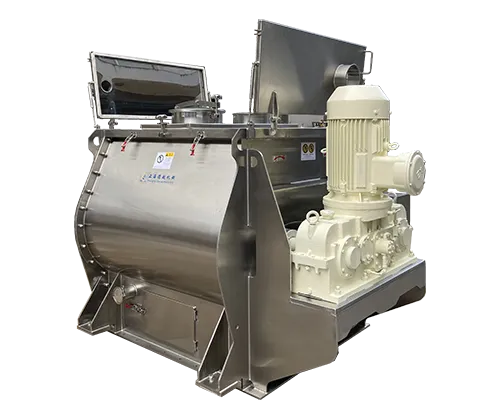
Industrial mixer troubleshooting is essential for maintaining production efficiency and minimizing costly downtime in food processing, pharmaceutical manufacturing, chemical blending, and cosmetics production. Whether you operate a high-shear emulsifier, a double-shaft paddle mixer, or a vacuum homogenizer, understanding the root causes of common equipment failures allows your team to respond quickly. This guide covers the ten most frequently encountered industrial mixer problems, their underlying causes, and practical solutions backed by real-world maintenance data.
1. Motor Overheating
Motor overheating is the leading cause of unplanned shutdowns. When motor temperatures exceed 80°C (176°F), insulation degradation accelerates — for every 10°C rise above rated temperature, motor lifespan is reduced by approximately 50%. Common causes include overloaded mixing chambers, inadequate ventilation, worn bearings, and voltage fluctuations exceeding ±10%. To address overheating, verify that mix viscosity does not exceed the rated torque specification, ensure cooling fans are unobstructed, inspect bearing clearance (acceptable range: 0.02-0.05mm), and install a voltage stabilizer if supply variation is frequent. A thermal overload protector set at 90°C provides critical backup protection.
2. Excessive Vibration
Vibration levels above 4.5 mm/s RMS indicate serious mechanical imbalance. Persistent vibration damages shaft seals within weeks and can cause catastrophic blade failure. Primary culprits are uneven blade installation, misaligned motor-to-gearbox coupling, product buildup on impeller surfaces, and worn gearbox bearings. Solution: disassemble and rebalance the impeller using a dynamic balancer, check coupling alignment with a laser alignment tool (tolerance: angular misalignment less than 0.05mm/m, parallel offset less than 0.1mm), and measure gearbox bearing play — replacement is required when radial clearance exceeds 0.15mm.
3. Seal Leakage
Mechanical seal failure accounts for approximately 35% of all mixing equipment repair calls. A leaking shaft seal allows product contamination and lubricant loss. Double mechanical seals should maintain buffer fluid pressure of 0.2-0.3 bar above process pressure. When leakage is detected, check the buffer fluid level first. Replace seal faces if wear marks deeper than 0.05mm are visible on carbon or ceramic mating surfaces. For single seals, verify the elastomer O-ring is not compressed beyond 20% of its original thickness. Regular seal inspection every 2,000 operating hours extends seal life by up to 40%.
4. Inadequate Mixing Performance
If your mixer fails to achieve a uniform blend within the specified cycle time, the issue typically traces to incorrect impeller speed, improper blade geometry, or vessel design limitations. The Reynolds number for laminar mixing should fall below 100, while turbulent mixing requires values above 10,000. For high-viscosity materials above 100,000 cP, verify that impeller tip speed is between 0.5-2.0 m/s. Switch from a paddle to a hydrofoil or pitched-blade turbine impeller for low-viscosity fluids. Ensure the baffle configuration provides at least 10% of the vessel diameter as total baffle width.
5. Unusual Noises
Grinding, knocking, or squealing sounds indicate progressive mechanical failure. Grinding noises typically originate from worn gear teeth — tooth wear exceeding 0.3mm mandates immediate replacement. Knocking suggests loose mounting bolts or a cracked impeller shaft. Squealing is almost always a bearing issue; check for axial play greater than 0.1mm. Diagnostic protocol: shut down the mixer, manually rotate the shaft by hand, and feel for binding. Listen with a mechanic's stethoscope on each bearing housing. Always replace bearings using a hydraulic puller — hammering causes micro-fractures leading to failure within 500 hours.
6. Gearbox Failure
The gearbox transmits torque from motor to impeller under extreme stress. Oil temperature above 75°C, metal particles exceeding 10 ppm iron in oil analysis, and gear tooth pitting are early warning signs. Scheduled oil changes every 3,000 operating hours using ISO VG 220 or VG 320 synthetic gear oil prevent 80% of gearbox failures. Monitor oil viscosity monthly — a drop exceeding 10% from new oil specification indicates thermal breakdown. When rebuilding, replace all seals, gaskets, and bearings simultaneously; cumulative labor cost of separate repairs exceeds a complete overhaul by 60-80%.
7. Blade or Impeller Damage
Impeller blades endure continuous impact, abrasion, and corrosive exposure. Inspect blades quarterly for material thinning — structural integrity is lost when wall thickness drops below 80% of the original specification. For stainless steel 304/316 blades, check pitting corrosion with a depth gauge; pits deeper than 0.5mm require replacement. Install blades in matched sets with weight tolerance within ±2 grams to prevent vibration-induced failures. Consider duplex stainless steel (2205) or tungsten carbide coating for abrasive slurries.
8. Electrical System Faults
Intermittent power loss and erratic motor behavior usually stem from electrical degradation. Check all motor terminal box connections — loose terminals melt insulation within days. Verify VFD parameters match motor nameplate ratings: rated frequency (50Hz or 60Hz), rated current, and base speed. Insulation resistance between windings and ground should measure above 100 MΩ at 500V DC; readings below 1 MΩ indicate moisture ingress requiring rewinding. Install 40kA-rated surge protectors to guard against voltage transients.
9. Temperature Control Issues
For processes requiring precise temperature regulation — polymer compounding, pharmaceutical emulsions, chocolate conching — heating jacket failures disrupt production quality. Jackets unable to maintain temperature within ±2°C of setpoint typically suffer from scale buildup, reducing thermal conductivity by up to 60%. Clean jackets quarterly with 10% citric acid solution circulated at 0.5 m/s for 30 minutes. Verify thermocouple calibration — drift exceeding ±1°C warrants sensor replacement. For steam-heated jackets, ensure trap efficiency is above 90%.
10. Control Panel Malfunctions
Modern industrial mixers rely on PLC-based control systems. Erratic timers, unresponsive touch screens, and HMI communication errors indicate control panel issues. Check terminal screw tightness and inspect I/O module connectors for oxidation. Backup PLC batteries below 2.5V risk losing program memory. Calibrate the resistive touch layer when replacing a faulty HMI screen; improper calibration causes positioning errors exceeding 3mm. Maintain a spare PLC module and HMI unit on-site to reduce mean time to repair from 8 hours to under 2 hours.
Mixing Equipment Type Comparison
| Equipment Type | Best For | Max Viscosity | Typical RPM | Common Failure |
|---|---|---|---|---|
| High-Shear Mixer | Emulsions | 50,000 cP | 1,500-3,600 | Stator/rotor wear |
| Dough Mixer | Bakery | 500,000 cP | 40-200 | Gearbox overload |
| Double-Shaft Paddle | Powders | 100,000 cP | 20-120 | Seal leakage |
| Vacuum Homogenizer | Cosmetics | 200,000 cP | 1,000-2,800 | Vacuum seal failure |
| Sigma Blade Kneader | Adhesives | 1,000,000 cP | 15-80 | Blade deformation |
Preventive Mixer Maintenance Schedule
Effective mixer maintenance prevents 90% of the troubleshooting scenarios above. Establish a structured program:
- Daily: Visual seal inspection, noise monitoring, oil level check.
- Weekly: Tighten bolt connections, clean vessel interiors, inspect blade condition.
- Monthly: Measure vibration with calibrated accelerometer, test emergency stop.
- Quarterly: Analyze gearbox oil for metal particulates, calibrate thermocouples.
- Annually: Complete gearbox teardown, impeller rebalancing, PLC backup and firmware update.
Conclusion
Industrial mixer troubleshooting requires a systematic approach combining mechanical inspection, electrical diagnostics, and process parameter verification. By addressing the ten most common problems — from motor overheating and seal leakage to gearbox failures and control panel malfunctions — maintenance teams can dramatically reduce unplanned downtime and extend equipment service life. Proactive mixer maintenance transforms reactive repairs into planned interventions that minimize production disruption.
For reliable mixing equipment built for demanding industrial applications, DEYUE MACHINERY delivers high-performance mixers engineered for longevity and ease of maintenance.
Contact DEYUE MACHINERY for expert advice on mixer selection, replacement parts, or comprehensive mixing equipment repair services:
Phone: +86 13917895463
Email:[email protected]
Website:https://www.deyuemixer.com/
label:
related news