 English
 Español
 Русский
 لالعربية
Products
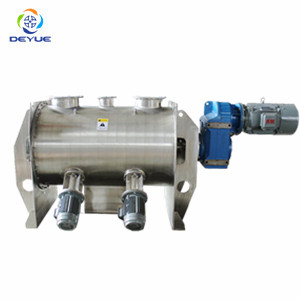
Industrial Plow Mixer
- Product details
1. Product Overview
The plowshare in the plowshare mixer rotates with the main shaft, causing the material to undergo radial circumferential turbulence along the cylinder arm. Simultaneously, the radial material flows along the flying knife group and is scattered by the high-speed rotating flying knives, undergoing continuous alternation and recombination, enabling the material to achieve uniform mixing in a relatively short period of time. The plowshare or inclined blade is mounted on the mixing shaft. When the equipment is operating, the structure of the plowshare causes the material particles to undergo continuous mixing motion with radial and longitudinal coordination in a circular trajectory, avoiding mixing dead zones and thus ensuring high-precision mixing. The principle of maintaining turbulence in the material under the action of this mixer, coupled with the plow-shaped shape of the mixer and the mixing speed, generates centrifugal vortex motion, resulting in three-dimensional diffusion and fusion of the stressed material. It is suitable for dry powder, particles and small blocks, as well as low-viscosity slurry.
II. Working Principle
The plow head inside the cylinder is driven by the reducer of the main motor, which transmits the rotation of the plow head assembly shaft. The material undergoes radial circumferential turbulence along the cylinder, and is simultaneously thrown out in the direction along both sides of the plow blade. On the other hand, when the material undergoing circumferential turbulence passes through the flying blade assembly, it is stirred by the high-speed rotating flying blades and forcefully scattered. Under the combined action of the plow head and flying blades, the material continuously overlaps and diffuses, achieving uniform mixing in a short period of time. The dispersion effect on powdered materials with fibers is particularly evident, with good mixing uniformity. For materials requiring solid-liquid mixing, the liquid is evenly mixed through a spraying device.
III. Scope of application
It is widely used in various industries for the mixing of powdery, granular, lumpy, viscous, and slurry materials. It serves as a mixing equipment for powdery, solid-liquid, and solid-slurry materials in food, chemical, fertilizer, pesticide, pharmaceutical, metallurgy, mining, building materials, ceramics, refractory materials, and adhesives industries. It allows for continuous feeding and discharging operations.
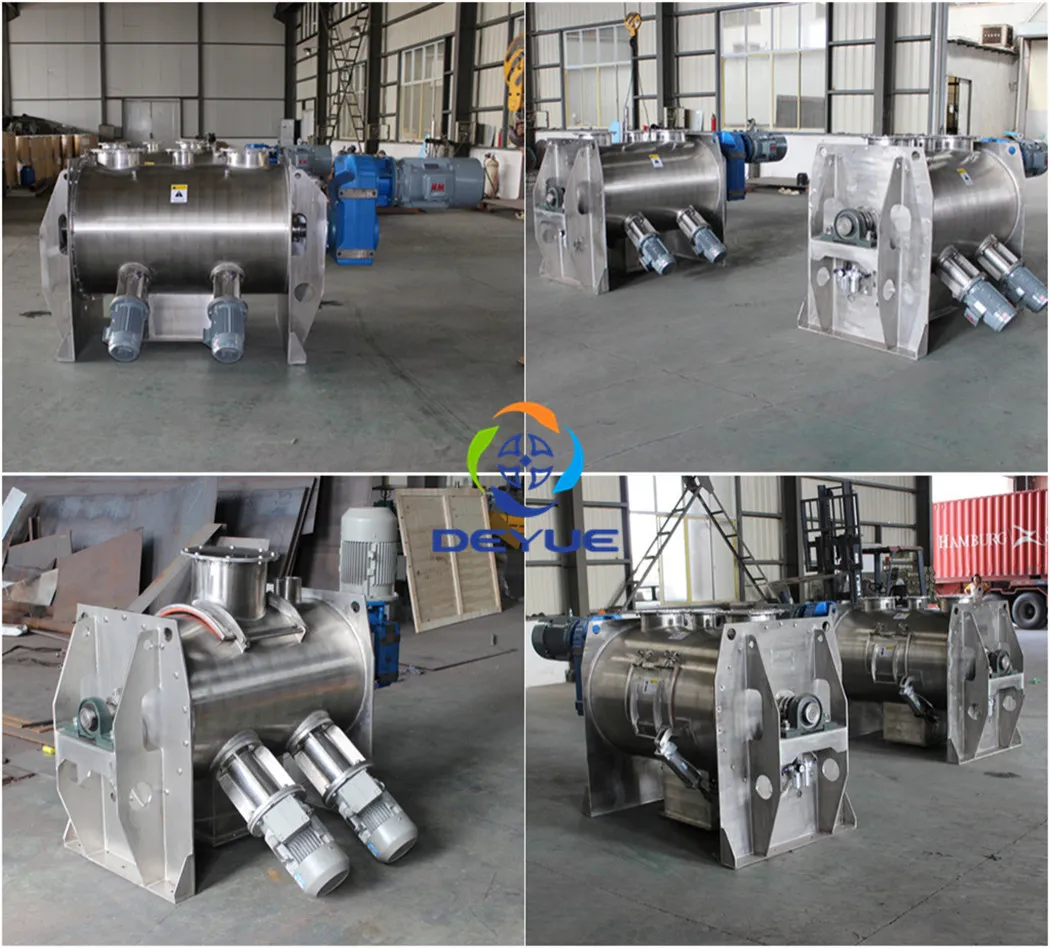
IV. Structural Features
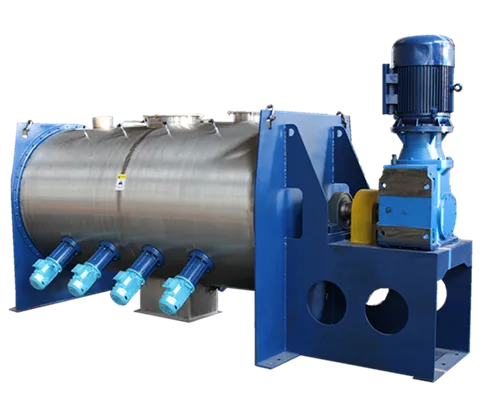
DTH plow blade mixer (Figure 9)
1. Horizontal cylinder: The cylinder is designed for horizontal operation and material handling. The upper part of the cylinder is equipped with a feed inlet, observation hole, maintenance hole, and material cleaning hole.
2. Plowshare assembly shaft: It consists of the plowshare, plowshare arm, and main shaft. One end of the plowshare arm is equipped with a plowshare blade, while the other end is mounted on the main shaft and designed with a half-and-half structure, facilitating assembly, disassembly, and maintenance.
3. Flying Knife Group: The flying knife shaft is equipped with several flying knives directly connected to the auxiliary motor. The auxiliary motor is installed on the outside of the cylinder to drive the flying knives to move at high speed, enabling strong dispersion of the material. To prevent dust from entering the bearings, the flying knife shaft adopts multiple sealing structures.
4. Transmission part: The main motor and reducer transmit the plow blade shaft to perform circular motion.
5. Discharge valve: The discharge valve is installed at the bottom of the cylinder and is used to control the material and discharge. This discharge valve can be manually or pneumatically operated.
6. Liquid spraying device: The liquid spraying device is arranged at the upper part of the cylinder and consists of pipe fittings and spray head components. It is fixed on the cylinder and evenly distributed for spraying.
7. Heating and insulation device: According to process requirements, a jacket or coil heating jacket can be provided, and an external insulation jacket can be added for heat retention.
Plow mixer
V. Technical Parameters
Note: * The mixing volume in the table is based on the measured data using powder material with a bulk density of 1 as the medium. The selection should be calculated based on parameters such as the mesh size of the product, bulk density of the material, and fluidity.
* In case of working conditions involving high temperature, high pressure, flammability, explosiveness, corrosivity, viscosity, etc., detailed data must be provided for separate model selection and customization.
* If there are any changes to the data and images in this table, no further notice will be given. The correct parameters are subject to the actual product provided.
* This table does not cover all products. For more information, please contact our sales engineer.
VI. Schematic diagram of small production line
VII. Product Advantages
1. Rich application experience and highly targeted non-standard design capabilities
Based on industry, raw material and finished product characteristics, pressure and temperature requirements, solid-liquid ratio, and supporting processes, Shanghai Deyue will develop highly targeted solutions in terms of drive devices, operability, and sealing performance. For example, we have developed a highly sealed, vacuum-pumpable, and heatable barrel specifically for the battery powder industry. We have also designed a complete machine that can be heated to 400°C for certain special powders. Additionally, we provide special flying knife crushing components for the environmental engineering sludge industry.
2. Reliable drive configuration
Drive devices with different capacities, power levels, and output speeds are configured according to the material properties, starting mode, and mixing method. Drive motors can be selected as needed, such as Siemens, ABB, SEW, etc., and can utilize direct coupling, sprocket connection, hydraulic coupler connection, etc. for torque output. The commonly used reducers are K series helical bevel gear reducers (or H series gearbox reducers), which have advantages such as high selection and use coefficient, large rated torque, high transmission efficiency, safety, long service life, low operating noise, low failure rate, and easy maintenance.
3. Efficient mixing device
The plow-type cutter head can achieve the purpose of adjusting the gap between the cutter head and the barrel wall or quickly replacing it according to different fineness and fluidity of the material. Based on the hardness and friction of the mixed material, the plow blade can undergo targeted surface hardening and wear-resistant treatment or be made of high-hardness materials to adapt to working conditions with strong wear. Such as: surface carburizing/nitriding, heat treatment, tungsten carbide spraying, etc. Main shaft agitator: ordinary plow-type cutter, serrated plow cutter, scraper razor; high-speed shear flying cutter: multi-piece cross cutter, double-leaf lotus cutter.
4. Powerful auxiliary components
The mixer can be equipped with various components for use, commonly including coil steam jackets, circulating medium jackets, online sampling valves, high-speed flying knives, temperature probes, weighing systems, dust removal and purification, vacuum drying, and other components. When adding a small amount of liquid, a liquid spraying device can be configured, which is more conducive to the uniform dispersion and mixing of the liquid within the powder material. The liquid spraying system consists of three basic components: a pressure source, a liquid storage tank, and a spray head. The material can be customized according to requirements, such as carbon steel, SS304 stainless steel, SS316L stainless steel, SS201 stainless steel, or other high-hardness alloy mixers. It is also possible to apply a polyurethane lining or spray high wear-resistant materials.
VIII. Selection method
1. Determine the volume of materials to be mixed for each batch and select equipment of the corresponding specifications.
2. Select the material for equipment manufacturing, which is divided into parts that come into contact with the material and parts that do not. Other parts of the equipment should maintain their original material. (The material is determined based on factors such as the nature of the material, operational requirements, and hygiene level. Conventional materials include carbon steel, 304/316L/201 stainless steel. After the material is selected, the surface treatment requirements are determined according to the specifications.)
3. Determine the driving capability of the configuration based on the specific gravity, fluidity, and other properties of the material, as well as the startup criteria.
4. Based on the actual process conditions, add auxiliary functional components such as liquid spraying, heating, cooling, etc.
5. Design the opening requirements of the equipment, such as feeding ports, cleaning ports, exhaust vents, etc.
6. Select the discharge mode and drive method, including manual, pneumatic, and electric.
Important Note: Equipment selection is a crucial step. Please provide as detailed information as possible about the materials and process arrangements, so that our professional staff can provide you with high-quality technical services.
related products
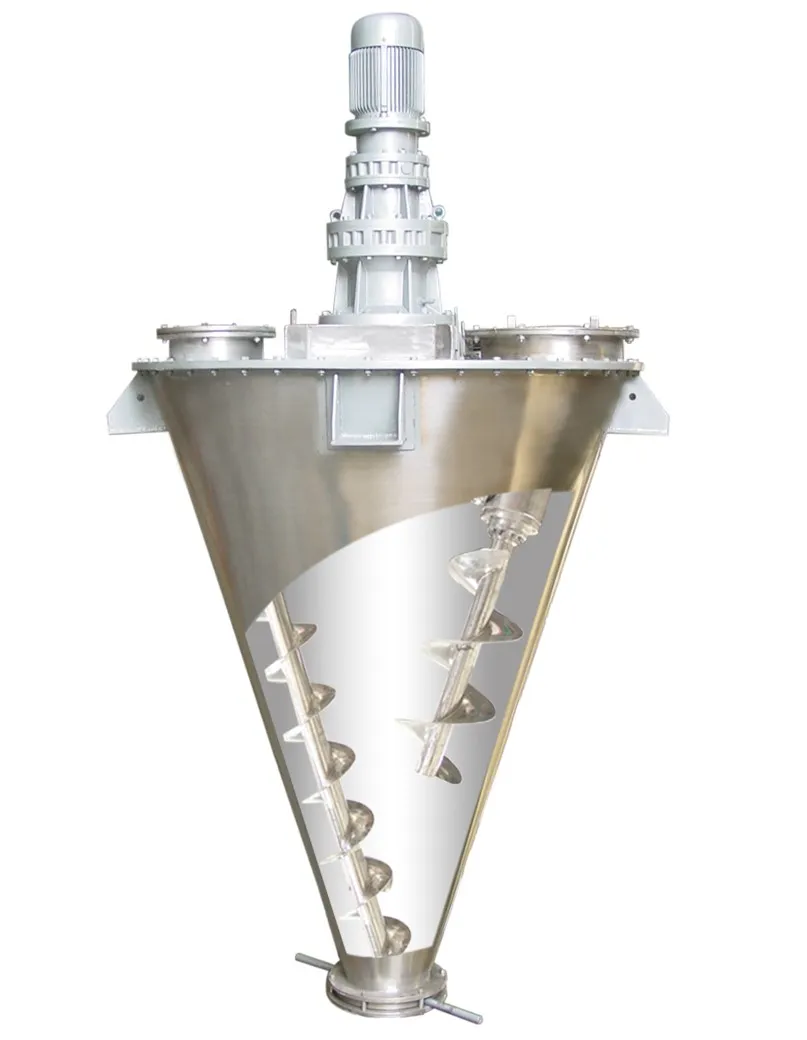
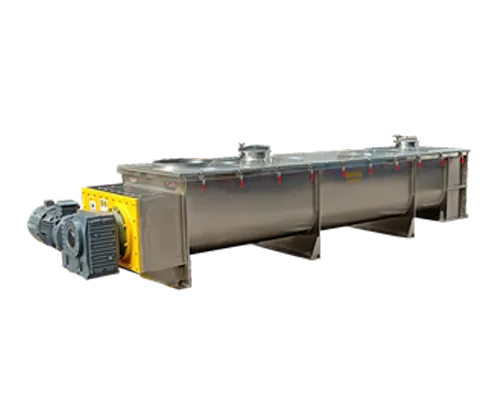
DJHX Continuous Twin-Shaft Paddle Mixer
DJHX continuous twin-shaft paddle mixer ...

DJH double-shaft paddle mixer delivers r...
Product Inquiry
Please leave your message, we will contact you quickly after receiving it, thank you for your support!
common problem
Q
What industries are the horizontal ribbon mixer suitable for ?
A
Q
What is the working principle of the plowshare mixer?
A